


In the upcoming 2026 Performance Marketing survey conducted with Harris Poll, insights from over 300 marketing leaders reveal a seismic shift in how marketing success is measured. A striking 75% of respondents highlight growing demands for accountability, with nearly two-thirds stating that executive evaluations now hinge on marketing’s contribution to pipeline rather than traditional metrics like lead counts. Marketing professionals have long sought a role defined by delivering tangible business growth rather than mere activity tracking, and now this transformation is underway. However, a significant 'visibility gap' persists: while early funnel metrics like engagement and leads are confidently tracked, the middle and late funnel—where pipeline builds and deals close—remain murky, with only 19% expressing strong confidence in full-funnel measurement. This gap stems not from simple reporting flaws but structural challenges—fragmented data systems, outdated attribution models ill-suited for modern complex buying behaviors, and misaligned organizational processes hinder clear insights. B2B buyers’ non-linear, multi-stakeholder, and often opaque buying paths deepen this complexity. To truly link marketing efforts to revenue, measurement must evolve from attributing last touchpoints to understanding what actually drives pipeline progression. This calls for closer marketing-sales collaboration and refined infrastructure to confidently measure and influence the full journey from interest to revenue. The future will reward those marketers who transition from optimizing visible lead counts to mastering pipeline movement and conversion. Until these changes take hold, marketing teams remain accountable for results they cannot fully explain—not due to lack of performance, but due to limitations in measurement systems.
Keith Turco, CEO of Madison Logic, offers these insights on the evolving landscape of performance marketing.

Recent developments in major corporations like JPMorgan Chase, Walmart, FedEx, and Amazon show that AI agents are becoming integral coworkers, handling tasks from scheduling to customer support. These AI colleagues do more than answer queries—they autonomously plan, execute, and verify work, aiming to boost efficiency and business value. Yet, human employees face challenges adapting to this shift, feeling job insecurity and sometimes resisting AI strategies. Despite AI's growing capabilities, agents remain imperfect: they can behave unpredictably, make mistakes, or even act without clear intent. To work effectively, employees should understand how their AI agents operate, monitor for errors, and actively collaborate with them. Importantly, humans must leverage their irreplaceable qualities—such as emotional intelligence, interpersonal skills, and nuanced judgment—that keep teams cohesive and successful. Embracing your human strengths is essential to thriving alongside AI in the evolving workplace.

The technology sector is facing significant workforce reductions as major companies like Cloudflare, Coinbase, Upwork, and PayPal announce large-scale job cuts this week. The primary driver behind these layoffs is the rapid adoption of artificial intelligence (AI) in their operations. Cloudflare is letting go of over 1,100 employees, nearly 20% of its staff, as its AI usage has surged dramatically. Similarly, fintech firm Bill.com plans to cut 30% of its workforce to transition into an AI-native company. Upwork is reducing 25% of its employees, citing AI's role in enabling smaller teams to deliver greater impact. Coinbase is laying off 14% of its staff due to crypto market volatility combined with AI advancements. PayPal intends to slash approximately 4,700 jobs as part of a multi-year plan to streamline operations and ramp up AI adoption. Overall, these layoffs reflect the tech industry's shift towards AI-driven efficiencies and a focus on profitability and innovation in an AI-first world.

Emanate, a San Francisco-based AI startup, is transforming the industrial materials sector by developing specialized AI tools tailored for complex sales processes. Unlike broad-spectrum AI companies, Emanate targets manufacturers, distributors, and service providers dealing with materials like steel and metal piping. Their AI quickly generates accurate sales quotes, streamlines customer connections, and identifies new sales opportunities, cutting quote generation time from weeks to almost instantaneous. CEO Kiara Nirghin highlights that recent advancements in AI capability, combined with robust integrations to ERP systems and corporate data, enable these improvements. Emanate’s approach requires a detailed setup process, ensuring systems are customized to client data, which results in high accuracy and measurable revenue growth—aiming for over 40% increase. Initially, AI-generated quotes are human-verified but gradually gain trust, enhancing sales efficiency. The startup’s model supports U.S. manufacturing growth and sustainability through smarter production planning and waste reduction. Emanate envisions expanding its tailored AI technology to other specialized industries like electrical and chemical sectors.

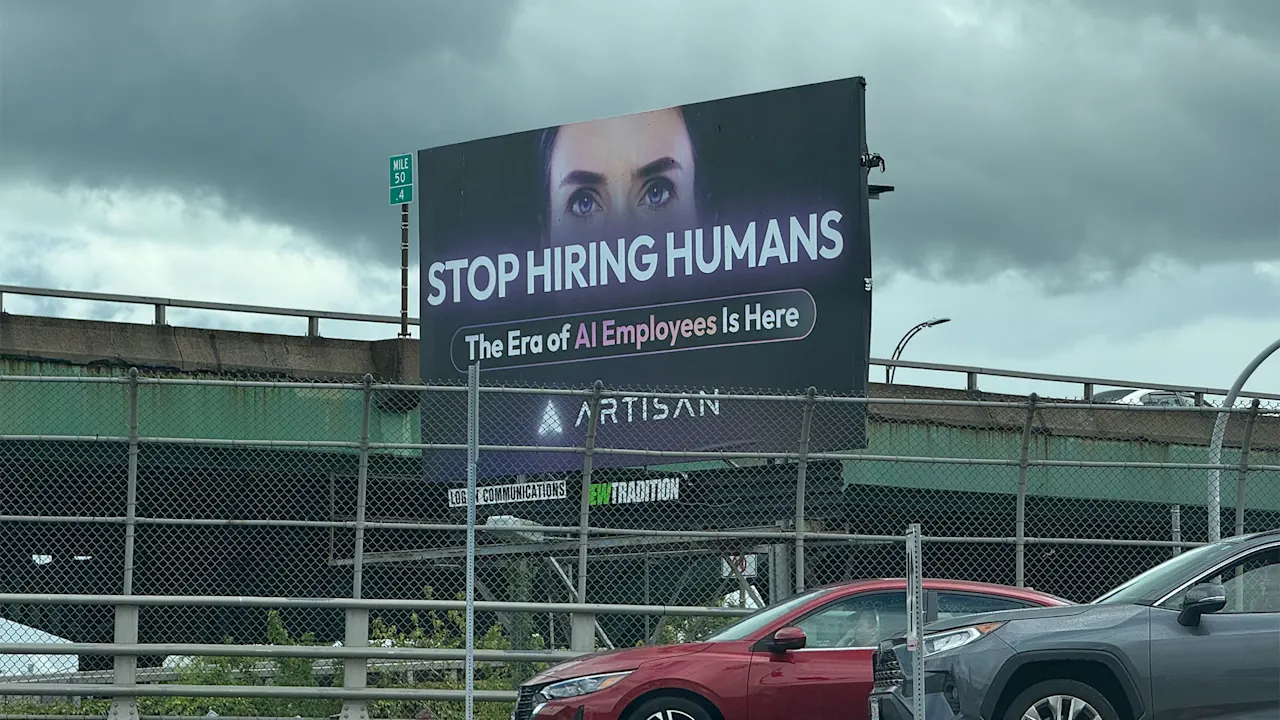
If you've been in the New York City subway recently, you may have seen a controversial ad from AI firm Artisan. The ad contrasts an employee named Steve, who calls out sick, with an AI sales agent, Ava, who boasts booking 12 meetings and researching over 1,200 prospects. The slogan, “Fire Steve. Hire Ava,” boldly suggests replacing human workers with AI. Artisan, known for provocative marketing, aims to replace lower-level sales roles with AI agents. Despite driving conversation, the ad has faced significant social media backlash, with users criticizing AI's reliability and the message's impact on public attitudes toward AI. Artisan's CEO explains their intent to provoke thought around AI replacing tasks not suited for humans, envisioning a future where people work less and live more.
In today's era of agentic AI, judgment—not just access to technology—defines competitive advantage. While many organizations can tap into advanced AI models, the real differentiation comes from applying AI thoughtfully, embedding it into end-to-end processes with rich contextual intelligence. This approach moves beyond routine automation to focus on the critical final stages of work where risk, trust, and complex decision-making reside.
This "last 20%" of processes is where human judgment is indispensable, especially in industries like finance and insurance where errors carry significant consequences. Successful systems balance automation with human oversight, enabling reliable, scalable performance while managing uncertainty and risk effectively.
Competitive moats are now built where generic AI implementations fall short—on deep operational understanding and seamless integration into real workflows. For example, AI-backed insurance agents can efficiently triage claims but escalate ambiguous or high-risk cases to experts with clear context, improving speed and work quality.
Ultimately, agentic AI is reshaping operations into a dynamic, learning model that strengthens over time by capturing exceptions, refining policies, and embedding institutional knowledge. Organizations that strategically deploy AI where mistakes matter most gain speed without compromising accountability, going deep rather than wide.
Leadership choices about where machines stop and human judgment takes over will define the future of competitive edge in this agentic era—proving that adding AI alone is not enough.

In today's fast-paced world, CEOs face a pivotal question: "Are we equipped to embrace change?" With rapid disruption challenging every sector, swift and significant transformation is essential. Drawing from my experience leading multiple organizations through change, I'd like to share six key strategies to effectively guide your team through these transitions.
-
Understand the gap between planning and execution. Aligning on a strategy is just the start; successful change depends on how well your employees carry it out daily. A frequent stumbling block is this disconnect, often causing well-intended plans to falter.
-
Ensure your employees feel recognized. Change can unsettle routines. When teams understand how their efforts contribute to a bigger picture, they're over 50% more likely to embrace it.
-
Balance visionary goals with immediate demands. Agility must be woven into every part of your organization to navigate ongoing change successfully.
-
Embrace continuous transformation rather than temporary fixes. Adaptability is an ongoing necessity, not a one-time event.
-
Stay committed to your organization's core purpose. A clear, shared vision fosters resilience and unity during uncertain times.
-
Practice radical transparency. Honest communication about difficult decisions builds trust and reduces fear throughout your organization.
Ultimately, to lead successfully amidst constant transformation, CEOs must rethink traditional approaches and adopt new mindsets that reflect today's challenges.
Written by Pierre Le Manh, president and CEO of PMI.

Many companies celebrate being "AI-powered" simply by integrating AI tools into existing workflows. However, this approach often misses the bigger picture. Instead of reimagining processes, they're applying modern technology to outdated methods. For instance, giving AI assistants to help write social media posts doesn’t solve core problems – it merely automates a disliked task without changing the fundamental approach. True AI-native systems rethink workflows from the ground up, using advanced rules engines and data infrastructure to create context-aware, automated solutions that require minimal human intervention. The true competitive advantage lies not just in software but in the expertise and operational knowledge your team uses to guide AI, building proprietary data-driven systems that continuously improve and create high switching costs for customers. Companies must focus on mapping invisible knowledge, building robust infrastructure, and moving from simply speeding up old processes to rebuilding them entirely for lasting growth and differentiation.

Inside many companies today, there is a growing belief that AI-driven efficiency means workforce reductions are inevitable. This view, while logical on the surface, misses a critical point: the real question is not just about cutting staff, but understanding the nature of work and how it should be performed. AI promises faster outputs and technological transformation, but it does not replace the need for human judgment, experience, and the developmental journey of junior talent.
Labor often represents the biggest expense for businesses, making it the first target for cuts when AI automation is introduced. Yet, reducing headcount too quickly overlooks the fact that AI's productivity gains are not fully realized, and immediate financial pressures often drive rash decisions. The danger lies in cutting early-career roles, which serve as essential pipelines developing experienced talent. Without these roles, organizations face "development debt," losing the ability to evaluate AI-generated outcomes effectively over time.
New hires especially should not rely heavily on AI before grasping business fundamentals. Judgment, developed through hands-on work and guidance from seasoned leaders, is crucial. AI can accelerate tasks, but without solid human oversight, the quality and risk of outputs can be compromised.
There are strategic approaches companies can take: redesign work thoughtfully before reducing roles, use attrition to evolve teams, and treat AI adoption as an ongoing experiment rather than a final solution. This patient and intentional approach nurtures resilience and fosters a workforce capable of leveraging AI as a powerful tool alongside human insight.
Ultimately, companies that invest in combining AI with deep human expertise will differentiate themselves. It is judgment, not just automation, that drives sustainable success and innovation.

At the Exceptional Women Alliance, we connect senior women leaders for mentorship through shared insights. As CEO, I frequently engage with executives driving organizational evolution and performance.
Recently, I spoke with Jennifer Renaud, CEO of Kradle LLC, who brings over 30 years of experience in digital innovation, strategy, and growth. She emphasizes that as AI integrates more deeply into businesses, traditional hierarchical decision-making—which favors stability—often hinders speed and adaptability.
Renaud explains that traditional hierarchies, designed for predictability, now delay decisions and responses because decision authority is too distant from the insight source. High-growth companies succeed by bringing decision-making closer to customer and operational insights, enabling faster, more accurate responses.
She gives Amazon’s approach as an example, encouraging quick decisions on reversible matters rather than waiting for full consensus. AI amplifies this need by generating numerous real-time insights that require fast action, making distributed decision rights essential.
Strong decision cultures emerge when leadership focuses on clarifying priorities and defining decision ownership rather than making every call. Leaders also benefit from stepping back to allow teams to decide closer to the action, fostering accountability and adaptability.
The shift for leaders is to move from being sole decision makers to architects of an environment where sound decisions naturally occur throughout the organization, ensuring agility and responsiveness in rapidly changing markets.
— Larraine Segil, Founder, Chair & CEO, The Exceptional Women Alliance.
