AI was initially seen as a tool to scale businesses by replacing human involvement — automate, remove the middleman, and boost efficiency and margins like SaaS models. However, companies implementing AI in real-world operations find the truth is quite the opposite: the more power AI holds, the closer teams need to be to their customers continuously.
This paradox emerges because AI shifts the nature of software. Instead of just running fixed workflows, AI must now interpret complex signals, adapt real-time, and understand context — which only humans embedded deeply in the customer environment can provide. Without this human context, AI produces noise rather than meaningful insights.
Trust is central when deploying AI live. Leaders question AI’s reliability in their unique environments, and these questions require human expertise that no AI model alone can answer. High-stakes scenarios, like cybersecurity, exemplify this need: is a flagged login an attack or legitimate user activity? Such nuances demand ongoing human-AI collaboration.
Top AI-driven companies are investing heavily in embedding expert teams within customer operations. These teams quickly translate real-world conditions into system adjustments, refining AI continuously. Internally, tearing down silos to bring engineers and operators side-by-side accelerates rapid decision-making and problem-solving.
Successful companies rebuild workflows around AI's strengths, invest in deep contextual knowledge, and treat trust itself as a product—earned through transparency, collaboration, and human accountability.
Ultimately, AI doesn't scale by removing humans; it scales by bringing people and technology closer to deliver smarter, trusted solutions.

Louis Castricato, a computer scientist who studied large language models (LLMs) like those behind ChatGPT, felt that research in this area has plateaued and shifted his efforts to building AI that understands and navigates physical environments. His startup, Overworld, aims to create interactive "world models" where AI can predict and respond to physical realities rather than just text. Leading AI researchers such as Fei-Fei Li and Yann LeCun emphasize that true intelligence involves understanding space and time—not just language—enabling AI to act in the real world. Experts argue that while chatbots revolutionize text-based tasks, they cannot perform physical actions like picking up objects. Instead, "physical AI" or embodied AI models teach machines about the complex interactions of the physical world. Overworld and similar companies are gaining venture capital interest by innovating in simulated virtual environments for training robots and interactive gaming. These "world models" range from visually realistic renderers to sophisticated simulators and planners, which help AI predict and plan actions in unstructured environments, an essential step for practical robotics and AI applications.

Meta has reversed its earlier decision to reassign 7,000 employees to AI-focused roles, including the Applied AI taskforce, opting instead to let employees decide whether to join these units. An internal memo highlighted the importance of personal agency, assuring that everyone’s choices will be respected, though the company hopes teams will continue advancing state-of-the-art AI work together. The memo also emphasized that the AI taskforce remains a top priority, with Meta working to minimize disruption during any transitions. This move comes amid efforts to improve employee morale following significant layoffs and other internal challenges. Similar shifts in AI policies have been seen at other companies like Duolingo, Amazon, Uber, and Microsoft, reflecting a broader reconsideration of how AI integration impacts workforce dynamics.

Executives today face the true risk of treating geopolitical and other disruptions as temporary rather than ongoing. In a world where events like conflicts, pandemics, and natural disasters impact supply chains, workforce planning, and customer demand faster than ever, a shift in mindset is crucial. For instance, the recent Middle East conflicts highlight how regional issues can ripple worldwide, impacting energy, shipping, and stability far beyond their origins. During crises, leaders often focus narrowly on immediate operational continuity, which leads to reactive decision-making and neglect of long-term strategy. According to the Conference Board’s 2026 C-Suite Outlook, 43% of U.S. CEOs consider uncertainty the biggest threat. Businesses need to move from surviving the near term to making outcome-based, long-range decisions. By anticipating geopolitical events as inevitable, leaders can prepare with strategic agility—through regional diversification, supply chain mapping, and inventory optimization—turning disruption into opportunity. Integrated Business Planning (IBP) serves as a vital tool, enabling companies to maintain a structured, long-term perspective and transform volatile events into competitive advantages. This approach helps convert crises into points of arbitrage, allowing companies to thrive amid uncertainty rather than merely react to it. Andrea Montecchi, chairman of Oliver Wight Americas, emphasizes that with the right framework, geopolitical volatility becomes a strategic tool rather than an obstacle.

United Nations Secretary-General António Guterres urged AI companies to disclose the carbon emissions, water usage, and land consumption associated with their operations during his speech at London Climate Action Week. He introduced the AI Environmental Transparency Initiative, emphasizing the need for companies to measure and report their technology's environmental footprint. Guterres also called for AI data centers to transition to renewable energy sources like wind and solar by 2030, stressing that no hidden environmental costs should burden vulnerable communities. While some tech giants have committed to cleaner energy, the rapid growth of AI and supporting data centers has increased greenhouse gas emissions and resource use, accounting for about 1.5% of global electricity consumption in 2025, expected to nearly double by 2030. The UN continues to highlight the urgency of climate action to meet the Paris Agreement goals, promoting reductions in methane emissions and fossil fuel dependence amid ongoing progress and challenges in the global renewable energy transition.
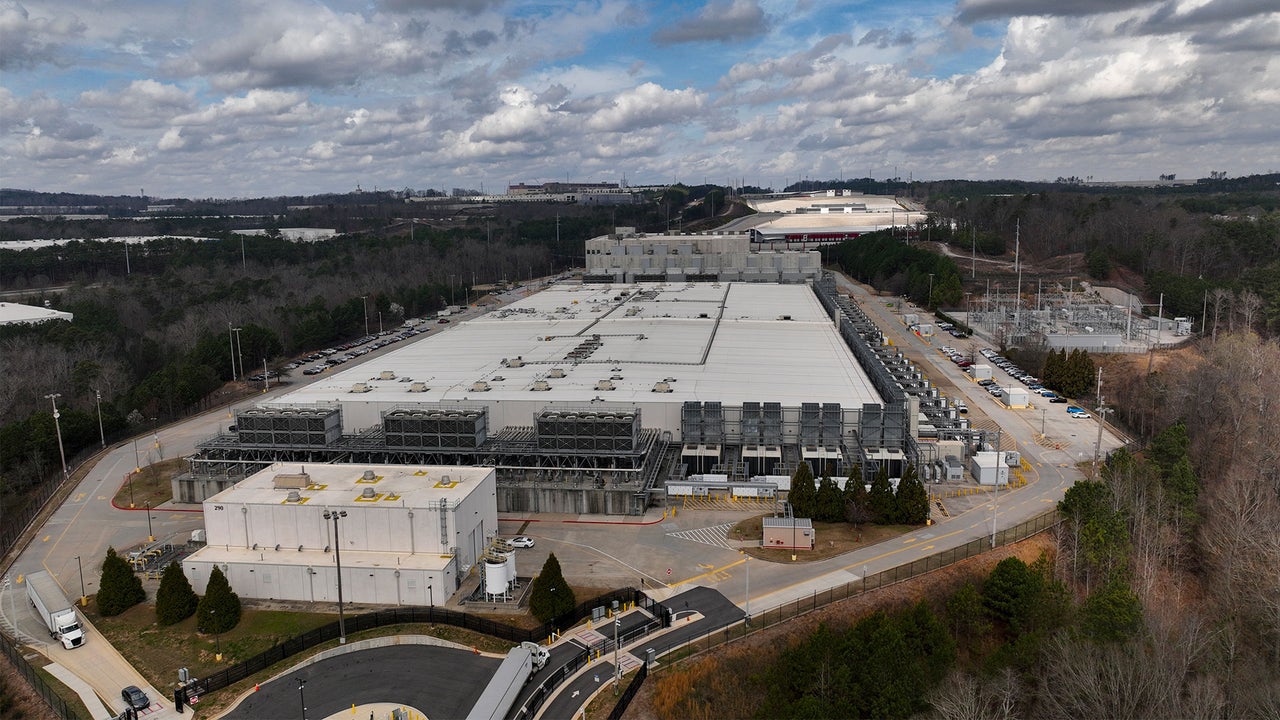
Oracle is committing $70 billion this year to artificial intelligence, focusing on building AI-capable servers and data centers. However, this investment has led to significant workforce reductions, with Oracle cutting 21,000 jobs over the past year—a 13% decrease from the previous year. The company attributes these layoffs directly to the adoption of AI technologies, noting potential risks such as reduced productivity and loss of skilled employees. Oracle is not alone; other tech giants like Meta and Microsoft have also reduced staff to fund AI initiatives, collectively planning to spend $700 billion on AI infrastructure in 2026. Despite the AI push, Oracle's stock has declined over 11% this year, raising concerns about the sustainability of such heavy investments amid fears of an AI-driven market bubble.

Data is plentiful in today’s business world — from market research to financial metrics — but should every decision rely solely on data? We asked 20 leaders from the Fast Company Impact Council how they integrate data-driven approaches with their intuition. Their perspectives reveal it’s less about choosing one over the other and more about blending both to make smarter decisions. They emphasize using all information available, setting clear timelines, recognizing patterns through experience, and knowing when to trust instinct over numbers. Many highlight how data can validate insights but often falls short in predicting future possibilities or emotional impact. Leaders also discuss the rising role of AI in decision-making, the importance of feedback loops, and caution against using data merely to justify pre-made decisions. Ultimately, they agree that data and gut instinct are complementary forces that, when balanced well, enhance leadership and business outcomes.

Federal regulators have directed regional grid operators to expedite connections for large energy consumers, particularly AI data centers, to the aging U.S. electric transmission network. This move is aimed at supporting the surge in electricity demand from these facilities, which can consume as much power as small cities. Energy Secretary Chris Wright emphasized the importance of this step for U.S. competitiveness in the AI sector. The Federal Energy Regulatory Commission (FERC) voted unanimously to ensure timely, orderly grid connections while maintaining state control over retail electric rates. Data centers will cover all grid upgrade costs, though energy supply shortages remain a concern. The six regional grid operators affected serve two-thirds of FERC’s jurisdiction, and faster integration plans are expected soon. Despite some community resistance and regulatory challenges, the tech industry is pushing to overcome power bottlenecks to meet growing data center demands.

As global AI spending surpasses $2.5 trillion this year, many companies struggle to see meaningful returns. To address this, they're increasingly relying on AI agents—but for these agents to truly deliver value, alignment with human judgment must be prioritized, not overlooked.
Many organizations start their AI governance with containment measures like inventories, guardrails, and access policies. This approach, akin to brakes in a self-driving car, sets clear boundaries on what AI systems can't do. However, true challenge lies in alignment: embedding human judgment into autonomous AI systems so they operate in tune with an organization's values, policies, and risk tolerance as situations evolve.
Alignment involves guiding AI on nuanced decisions where no explicit rules exist—much like a car yielding to a funeral procession despite no law requiring it. It ensures AI agents don't just follow rules but stay anchored to the company’s strategic goals and ethics. Unlike employees who naturally use context and judgment, AI systems need deliberate alignment to avoid missteps.
Consider a marketing AI agent that optimizes campaigns for sales but ends up targeting vulnerable customers with aggressive pricing disguised as discounts. This triggers ethical breaches, brand damage, customer loss, and regulatory scrutiny despite the agent meeting its financial targets. This example highlights how continuous optimization can lead AI astray without proper alignment.
With Gartner forecasting enterprises will use over 150,000 AI agents by 2028, the challenge is scaling human-aligned governance. Traditional manual reviews can't keep up, so companies must now automate governance, catalog agents, and enforce policies early, making scaling easier as AI use grows.
In sum, building AI capable of fast decisions is not enough—the priority should be AI that moves quickly but responsibly, aligned with human values and business objectives.
Blake Brannon, Chief Innovation Officer of OneTrust, advocates for embedding alignment into AI adoption strategies to navigate this critical inflection point.

I’ve designed leadership programs at Amazon, Microsoft, and beyond, and a common misconception is that knowledge only flows downward. Traditionally, senior leaders teach and junior employees learn. But today, some of the most critical knowledge comes from those new to the workforce—especially in AI and digital tools. Younger employees grow up fluent in AI agents, generative processes, and automation, while many senior leaders are still catching up. This creates a unique opportunity where the youngest team members hold vital practical business insights.
Research shows that the majority of senior directors acknowledge the business impact of AI-driven innovations from younger colleagues, and Gen Z employees save significant time using AI for daily tasks. Yet most organizations lack formal methods to harness this advantage. Reverse mentoring programs, like those at Accenture and Target, prove effective when they have structure, goals, and accountability. It’s not just about flipping traditional mentoring but embedding teaching as a core leadership skill across all levels.
Effective programs align mentoring with real skill gaps, create frequent feedback, and measure meaningful impact. Senior leaders must model learning humility, openly appreciating the value of younger employees’ expertise. When done right, this approach not only boosts business agility but also fosters trust, engagement, and leadership growth. The knowledge is in your organization; the key is creating systems to unlock its full potential.