


Morgan Stanley has revolutionized its profit and loss (P&L) reconciliation process by deploying an AI system that reduces manual work by half. Unlike the trend of increasing AI autonomy, their approach keeps human controllers closely involved in the decision-making loop. The internal system, named FIXR, collaborates with controllers by interpreting past guidance, learning from behavior, and codifying repeated patterns into automated rules. This hybrid model enables FIXR to resolve routine mismatches swiftly while escalating complex cases for human review, saving about 1,500 hours weekly across 100 controllers. The strategy emphasizes establishing strong processes first, followed by gradual automation, ensuring accuracy and maintaining human accountability. Morgan Stanley’s approach highlights the importance of trust, continuous feedback, and incremental AI adoption in accuracy-critical financial workflows.

Square has launched a new integration with ChatGPT and Claude, allowing consumers to find restaurants and place orders directly through these AI platforms without any technical setup required from the restaurants. This new system pulls data in real-time from Square’s existing catalogs, including menus, prices, modifiers, and stock availability, ensuring accurate and seamless ordering experiences. Unlike traditional third-party delivery apps that charge hefty marketplace commissions, Square only charges its standard online transaction fees, eliminating additional marketplace costs and helping restaurants preserve profit margins. Orders placed via AI agents either complete checkout within the chat interface or redirect customers to the merchant’s standard ordering page with pre-filled baskets. This AI-powered channel is designed to function as direct ordering, helping businesses capture new customers efficiently. Square’s collaboration with brands like Partners Coffee highlights the focus on using this technology to support the core in-person customer experience while increasing digital discoverability and order efficiency. This integration is currently available for U.S.-based restaurants using Square Online Ordering and signals a shift towards agentic commerce, where AI tools increasingly drive ecommerce transactions. Square is also partnering with major players like Google and Amazon to expand AI shopping capabilities in the future.

Anthropic has reinstated global access to its powerful AI model Claude Fable 5 after the U.S. Department of Commerce withdrew the export control order. Initially restricted due to a June 12, 2026 emergency directive, Fable 5 is now available across Anthropic's ecosystem, including Claude Platform, Claude.ai, Claude Code, and Claude Cowork. Access on major cloud providers like AWS, Google Cloud, and Microsoft Foundry is being restored, though confirmation is pending. Meanwhile, Mythos 5 remains limited to select U.S. organizations under strict vetting due to ongoing government coordination. The U.S. government praised the decision as a step toward swift, safe AI deployment, reversing concerns that restrictions would hinder U.S. AI leadership and give competitors an edge. Anthropic has committed to heightened security measures and collaboration with regulators to continuously manage model risks. Enterprises should note the pricing structure is among the highest on the market and there is a temporary discounted rollout through July 7. The episode underscores regulatory volatility risks and the growing industry focus on balanced AI safety, sovereignty, and operational resilience.

Enterprise AI programs are rapidly expanding but struggling with governance and ownership issues. Most lack a clear, centralized owner accountable for AI oversight across multiple platforms, resulting in a "control gap" where ambition and spending outpace visibility and cost management. About 85% of organizations run multiple AI platforms competing for primacy, yet only 10% employ active monitoring and alerting for model failures—most rely on manual reviews. Shadow AI and unauthorized agentic usage are common, causing significant financial and operational risks. Despite growing AI portfolios, organizations often face fragmented accountability, limited automated detection, and disappointing returns on custom model investments. The core barrier to effective AI governance is the absence of a dedicated accountable owner, not technology or spending. A shift towards centralized ownership and better cross-platform controls is essential to close this widening control gap.


Publishers are adapting their websites to be more AI-friendly, ensuring their content remains accessible and visible in AI-powered search engines as the agentic web evolves.


At Cannes Lions, Autodesk CMO Dara Treseder reflects on the advertising industry's mixed emotions—excitement and anxiety—especially about AI's role. Highlighting the contrasts in Nike and Adidas' World Cup campaigns, she praises Adidas for deep storytelling and Nike for fast, culturally-driven marketing. Treseder stresses that while AI can enhance marketing processes, true creativity relies on human insight. She argues that the best marketers know when to use AI and when to rely on human ingenuity. Discussing the evolving CMO role, she notes CMOs are now key strategic partners in business with increasing revenue responsibilities, offering companies a competitive edge.


Artificial intelligence is transforming every aspect of financial institutions—from their internal operations to their competitive strategies and client engagement methods.


Small business owners are evolving their approach to AI by managing entire teams of AI agents who take charge of essential functions like customer service, marking a shift from simple tool usage to workforce oversight.


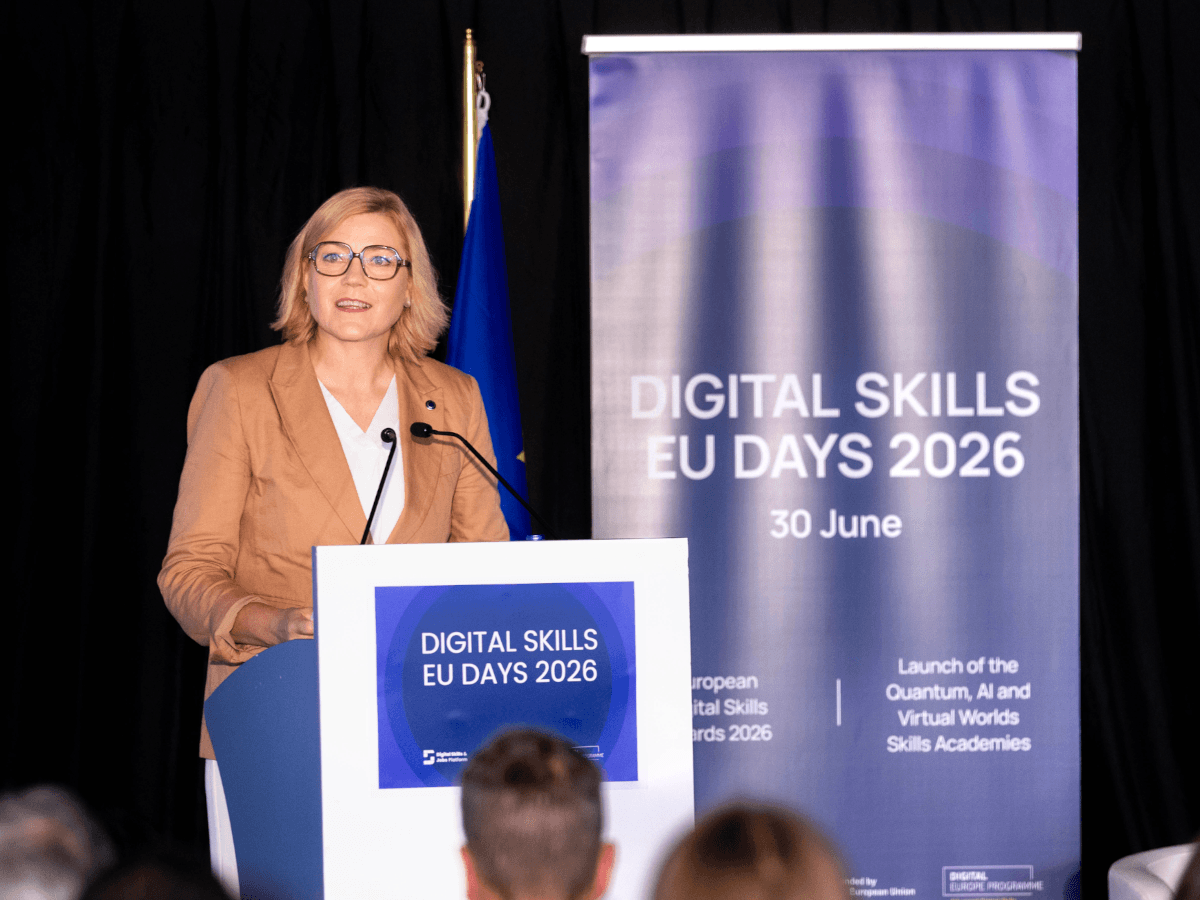
Three newly established academies aim to tackle European challenges in technology sovereignty and global competitiveness by specializing in quantum computing, artificial intelligence, and virtual environments. This initiative represents a strategic effort to develop a skilled workforce capable of advancing these critical technologies.
Anthropic has introduced Claude Science, an app designed to simplify scientific research by integrating various tools, resources, file formats, and databases into a single platform. The aim is to eliminate the cumbersome and repetitive parts of research workflows, making it easier and more efficient for scientists to focus on discovery.
