Uber is investing in Atoms, Travis Kalanick's robotics company, which promotes the use of industrial AI to revolutionize global industries.


Nigel Morris reflects on four decades in financial services and why AI marks a revolutionary shift unlike previous innovations such as branchless banking, blockchain, or the rise of Big Tech. Past waves transformed banking by digitizing services, leveraging data, and reducing costs, but AI is poised to be the fundamental operating system of global finance. From wealth management to risk compliance, AI is reshaping every element of the financial ecosystem, making processes faster, cheaper, and more personalized. Morris emphasizes that incumbents must embrace transformation and AI-driven reinvention or risk losing ground to agile fintech startups. He underscores AI’s ability to reduce marginal costs to near zero and create products tailored to individual behaviors and needs. The future financial landscape will be radically different, shaped by those willing to adapt aggressively to AI’s potential.


The water industry has raised serious concerns about the UK’s capacity to support future datacentres, highlighting potential water shortages that could impede AI development plans. Datacentres require substantial water usage to cool their server equipment, utilizing systems like cooling towers and chillers. This demand is compounded by the high electricity consumption that indirectly drives water usage. Industry experts warn that without government intervention to address these cooling water needs, the ambitious plans for AI growth may face critical obstacles.

Tech employees are increasingly turning to unions, challenging the long-standing notion that Silicon Valley workers are immune to unionization. Traditionally, tech jobs came with top-tier pay, excellent benefits, and a casual culture that gave engineers a sense of equality with their managers. However, recent AI-driven layoffs and concerns over job security have changed the landscape. Workers at companies like Google DeepMind and Meta are now pushing back against not only job risks but also ethical concerns about AI's military use and workplace monitoring. These developments have sparked a growing wave of union efforts among tech professionals.
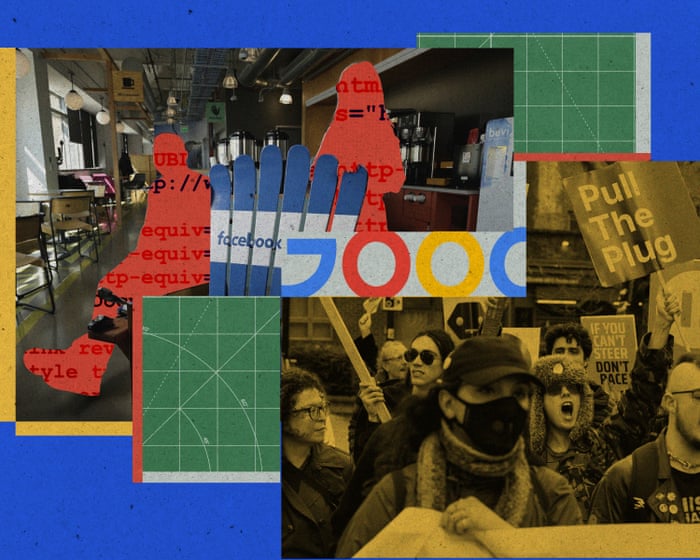
Google’s recent AI difficulties highlight growing concerns as new Chinese AI models challenge US technology leadership. Blake Montgomery shares insights following a cultural-filled Sunday featuring Christopher Nolan's The Odyssey and the World Cup final. The focus today is on China's advance in the AI race and Silicon Valley workers' efforts to safeguard their roles against AI automation. Notable developments include New York's unprecedented one-year halt on new AI data centers, sparking political debate and parallels in Australia where calls for regulatory pauses grow. Other tech news covers IBM's shares tumbling, teenagers' mixed reactions to the UK’s social media curfew, and a massive billing glitch affecting Amazon Web Services customers worldwide. For further reading, visit the original article on the tech rivalry between China and the US.


Erik Brynjolfsson challenges the common question about AI's impact by urging us to focus on how we use AI rather than what AI will do to us. In a conversation on "Me, Myself, and AI," Brynjolfsson, a leading economist at Stanford, discusses the critical role human choices, institutions, and organizations play in shaping AI's economic and social impact. He reflects on his earlier predictions about AI progress, the complexities behind AI adoption, and the importance of investment in complementary assets like new skills and business models. Brynjolfsson highlights recent research showing that AI's impact on jobs varies significantly by age and occupation, emphasizing the need to think beyond job automation to the creation of new opportunities. He advocates for mindful optimism, stressing human agency and values in directing AI's development toward economic growth and shared prosperity. The conversation covers the challenges of measuring AI's benefits, the J-curve effect in productivity adoption, and the balance between academic and industry roles in AI innovation. Brynjolfsson calls for active engagement from all stakeholders to navigate AI's transformative potential responsibly.


Presented by Atlassian
Many companies are approaching AI adoption incorrectly by focusing on individual use rather than how teams collaborate, explains Dr. Molly Sands, head of Atlassian's Teamwork Lab, in a discussion at VB Transform 2026. Sands' team of behavioral scientists studies how AI reshapes teamwork and assists organizations in redesigning their workflows.
Atlassian’s State of Teams Report, surveying 12,000 knowledge workers and Fortune 1000 executives, reveals a gap between AI activity and tangible value. While 89% of executives noted increased individual AI use, only 6% could identify clear ROI. In contrast, 14% of teams successfully turned AI usage into real value by focusing on context, workflows, and culture.
Successful teams create a "context graph" capturing shared goals and decisions, redesign entire workflows rather than speeding isolated tasks, and foster a culture of experimentation and learning. Sands encourages leaders to implement AI working agreements to align team AI use and avoid fragmented knowledge. Ultimately, AI exposes longstanding teamwork challenges, emphasizing the need for shared context and explicit workflows.

Xavi Amatriain, Expedia Group’s chief AI and data officer, shared insights at VB Transform 2026 about how evaluation metrics ('evals') are becoming the new product requirement documents (PRDs). He explained that evals, which include red teaming and security checks, are embedded into product design from the start, simplifying the development process especially with AI-assisted code. Drawing from his experience at Google, Amatriain emphasized the importance of specialized AI agents over monolithic models, advocating for a system composed of narrowly scoped components to improve security and functionality.
Amatriain also discussed Expedia’s risk-calibrated governance framework, which involves layered principles, tools, and automated checkpoints tailored to the level of risk each AI agent poses. He stressed minimizing guardrails to avoid biasing user feedback, while maintaining essential safeguards based on risk. Expedia’s AI agents blend real-time data and user context to provide timely, trustworthy recommendations without taking final actions like bookings, ensuring user control remains paramount.
On security, Amatriain highlighted the growing threat from other AI systems and the necessity of embedding security considerations early in design. He underscored the critical role of continuous monitoring and rapid incident response, noting that many companies have already faced AI agent security incidents. These insights illustrate the evolving challenges and strategies in deploying AI responsibly at scale.

Google DeepMind has launched three new AI models—Gemini 3.6 Flash, Gemini 3.5 Flash-Lite, and Gemini 3.5 Flash Cyber—designed for greater token efficiency, speed, and cost-effectiveness. Gemini 3.6 Flash is priced at $1.50 per million input tokens and $7.50 per million output tokens, with Gemini 3.5 Flash-Lite even more affordable at $0.30/$2.50. These models significantly reduce token consumption, with Gemini 3.6 Flash cutting up to 65% of token use on complex engineering tasks compared to previous versions, enhancing speed and reducing costs for enterprises. The models support up to 1 million tokens in input and 64,000 tokens in output, improving benchmarking scores in long-horizon engineering, machine learning, and knowledge work efforts. The new Flash Cyber model is fine-tuned for cybersecurity, targeting vulnerabilities and integrating with Google's CodeMender platform, though it's available only to governments and trusted partners. Google is still testing the more powerful Gemini 3.5 Pro, expected to be announced soon. These AI advancements emphasize efficient, autonomous agent systems for enterprise applications, though all models remain proprietary and accessible solely through Google's API services on a commercial licensing basis.


AI is transforming media roles, prompting Omnicom Media Group to rethink how agencies operate. Rather than AI eliminating agencies, it compels them to transform by focusing on strategy, data, and specialized capabilities over mere scale. Omnicom Media bets the future success of agencies lies in these areas as AI automates traditional tasks.