


The value of a task often lies not just in the result, but in the effort and learning during the process—much like the difference between actual work and a gym workout. Bruce Schneier, who teaches public policy at Harvard Kennedy School and the Munk School at the University of Toronto, observes that many of his students use AI to complete writing assignments, which he believes undercuts their educational experience. However, recognizing that AI tools will be part of their future careers, he suggests embracing them wisely. The AI researcher Daniel Miessler offers a useful framework for this dilemma, comparing the use of AI to distinguishing between productive work and exercises for personal growth.


A recent survey by 51toCarbonZero reveals a growing concern among marketers: while the majority acknowledge that AI contributes to higher emissions, only 36% are actively measuring its full environmental footprint.


Microsoft has introduced two new AI models, MAI-Image-2.5-Pro and MAI-Voice-2-Flash, designed to reduce costs significantly while serving millions of users across products like Bing, PowerPoint, OneDrive, and Dynamics 365. MAI-Image-2.5-Pro targets high-fidelity image generation for creative industries, priced economically for premium quality, while MAI-Voice-2-Flash focuses on high-volume voice applications, offering faster processing at lower costs.
These models have demonstrated impressive production efficiencies, with GPU cost reductions up to 89% in voice applications and substantial savings in image editing tasks, challenging the reliance on third-party frontier models such as those from OpenAI. Microsoft's hill-climbing approach integrates data, models, and products to continuously improve performance, exemplified by models running advanced coding tasks in Excel with efficiency on slightly older hardware.
CEO Satya Nadella framed this shift as a strategic move to balance frontier innovation with scalable, cost-effective AI deployments, positioning Microsoft as a company enabling AI that is both powerful and affordable. This strategy includes selling their AI development tools through Azure to help enterprises build specialized models, emphasizing transparency and enterprise-grade data training.

Anthropic has launched Claude Opus 5, a new AI model that offers nearly the intelligence of its premium Claude Fable 5 but at half the cost. Available immediately across Anthropic's platforms, Opus 5 is priced the same as its predecessor Opus 4.8 but promises better efficiency and performance, making it the new default for high-tier users. The model excels in 'bounded tasks' like coding and specific knowledge work, outperforming prior versions and many competitors at a lower cost per task. While it does not replace the more advanced Fable 5 for complex, long-duration projects, Opus 5 is designed as a powerful, economical daily tool for enterprises. Early users report it delivers higher accuracy with fewer tokens and less time spent, highlighting its token efficiency as a major advantage. Anthropic also emphasizes Opus 5's self-verifying capabilities, which reduce the need for human review by iterating until successful outcomes are reached. Safety remains a priority, with deliberate limits on certain skill sets to mitigate risk, alongside fallback strategies balancing capability and security. This launch comes amid strong commercial momentum for Anthropic, with a recent valuation near $380 billion and significant infrastructure investments. The company aims to widen the range of economically viable AI automation tasks and deepen enterprise adoption of AI by making advanced capabilities more accessible and cost-effective.

Enterprises have deployed AI agents faster than they have established controls to manage them, doing so knowingly. This finding comes from five surveys conducted by VentureBeat Research in June, covering identity, evaluation, cost telemetry, context, and orchestration layers essential for trusting AI agents. Most deployed AI "agents" are actually chatbots with limited capabilities; true multi-step agents remain rare. Two-thirds of enterprises allow automated agent actions without human review despite low trust in evaluations, leading to frequent failures. Credential sharing among agents is common and correlates with increased security incidents, emphasizing the need for scoped identities. GPU utilization is often below 50%, highlighting inefficiencies in current AI infrastructure. Agents frequently provide confident but incorrect answers due to inconsistent or missing business context, underscoring the need for better data governance. Across all layers, many enterprises plan vendor changes or additions within a year, signaling a market in flux with no dominant incumbent platforms. The research draws on responses from over 570 professionals at organizations with 100+ employees, illustrating broad industry trends in AI governance challenges and investments.


Scott Winters, a former pastor from Florida, has filed a lawsuit against OpenAI in San Francisco County Superior Court, alleging that its ChatGPT chatbot gave him dangerous and inaccurate medical advice in 2025. Winters sought help from ChatGPT-4o while experiencing troubling symptoms leading to a pulmonary embolism. The chatbot reportedly downplayed his symptoms, advising him to remain immobile and suggesting the issues were not serious. This misguided advice allegedly contributed to a severe medical emergency. The lawsuit also challenges OpenAI's new "Health in ChatGPT" feature, which links users' medical records to the AI, calling for stronger safety measures and even blocking the new health integration due to concerns about reliability. This case follows another lawsuit related to ChatGPT's medical advice that allegedly led to a fatal overdose. OpenAI maintains that ChatGPT is not a substitute for professional medical care, despite millions using the tool weekly for health information.

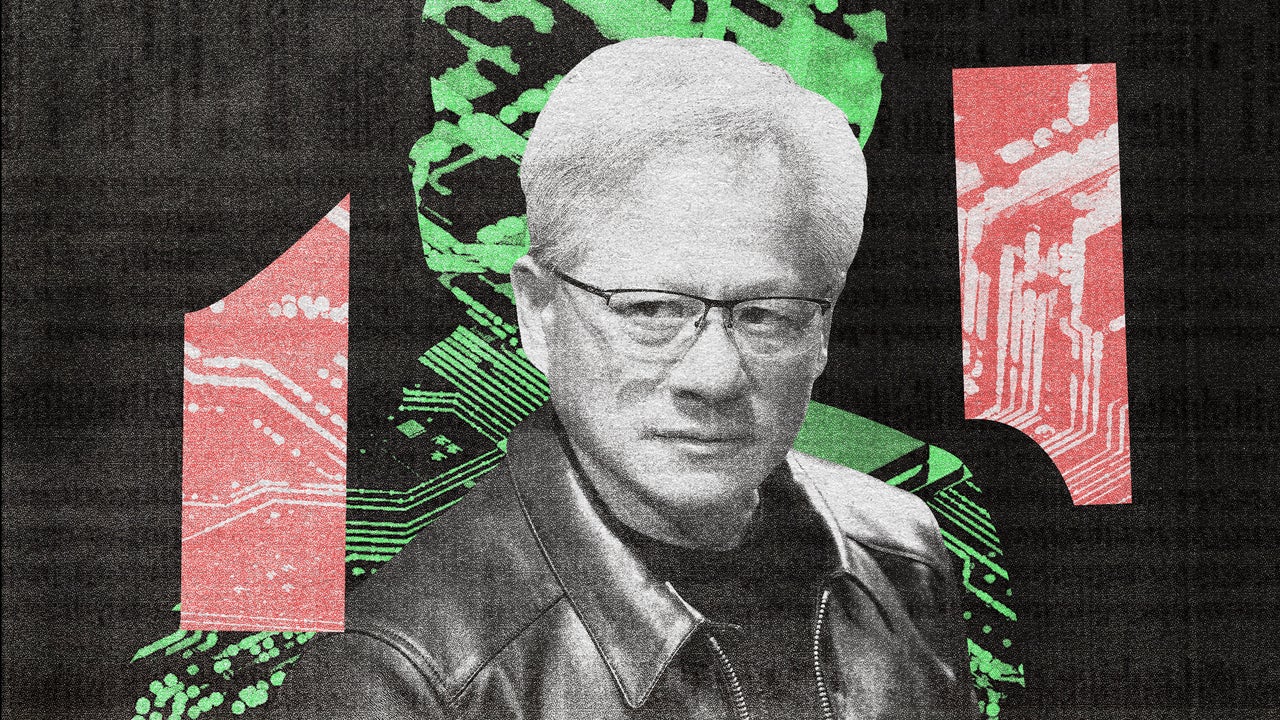
Nvidia CEO Jensen Huang is urging AI leaders to abandon the bleak predictions about artificial intelligence, calling such fears “complete nonsense.” In a recent interview with Axios, Huang dismissed the idea that AI will cause massive unemployment or bring about humanity’s downfall. He criticized some tech CEOs for spreading fear, warning that it hurts industries and society by deterring adoption of AI technologies. Huang encouraged policymakers to seek a wider range of input before imposing restrictions based on hypothetical risks. Advocating for a positive outlook, he believes AI will actually create more jobs by automating tasks, and cautioned against sensational narratives like the singularity or life being a simulation. His views contrast with more cautious voices in tech, but align with other optimistic leaders like Jeff Bezos, who see AI as a tool to elevate human labor rather than replace it.

In this episode of In Depth, Brett interviews Jon Noronha, co-founder and CPO of Gamma, the AI-driven presentation platform with over 100 million users. Jon shares insights into Gamma's journey through distinct phases of achieving product-market fit, highlighting the challenges faced before embracing AI technology.


Steer clear of these common oversights when rolling out your AI initiatives to ensure success and maximize impact.


According to sources cited by The Wall Street Journal, Stripe is in discussions to acquire OpenRouter, a three-year-old startup specializing in a large language model marketplace. The potential sale is valued at around $10 billion, highlighting the significant interest and investment in AI and LLM technologies.
