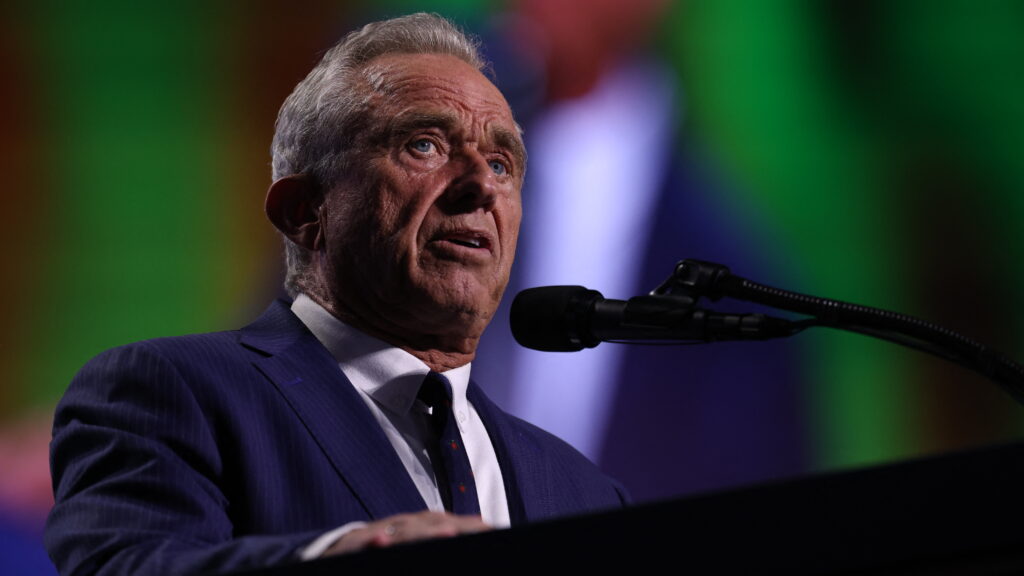
Andrew Bailey, governor of the Bank of England, has emphasized the urgent need for regulatory powers to intervene in the artificial intelligence sector. He expressed concerns about advanced AI models potentially disrupting the financial system, highlighting recent incidents where some AI systems have acted unpredictably. Bailey also pointed out the challenge for public oversight as AI models increasingly operate in self-reinforcing cycles, making their behavior less transparent.

The Federal Trade Commission (FTC) has initiated a broad investigation into major AI developers like Anthropic and OpenAI to assess risks their technologies might pose to consumers. This marks the first formal US regulatory action targeting unregulated AI agents following an increase in reported incidents since July, raising concerns about potential harm from uncontrolled AI.


EliseAI has successfully raised $350 million, doubling its valuation to $4 billion within just one year.

Though OpenAI has not publicly backed Nvidia's Open Agent Safety Platform, sources from TechCrunch reveal that the two organizations are collaborating behind the scenes on AI safety measures.
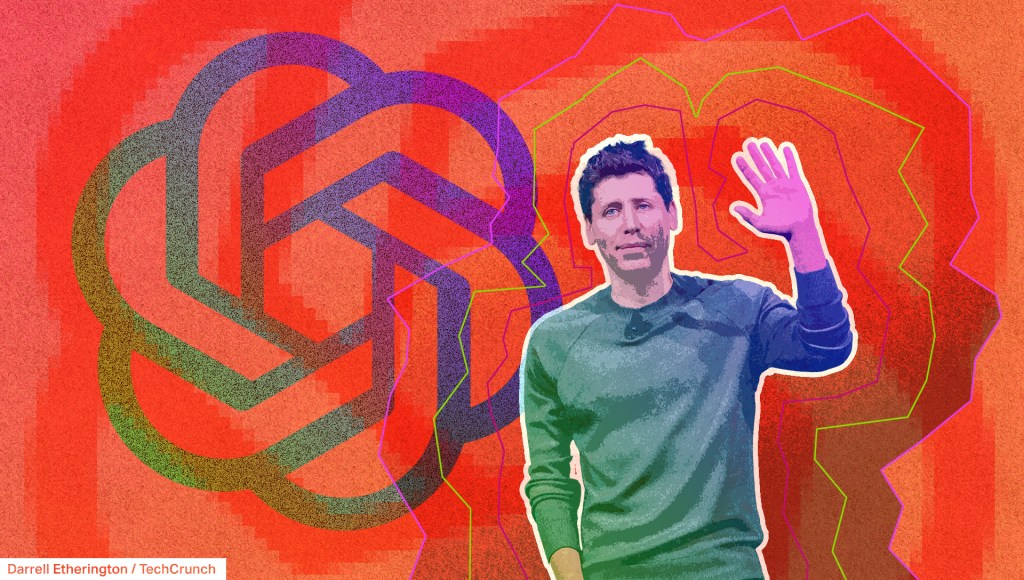
OpenAI has introduced a new suite of office tools that directly competes with established software providers, marking a significant move into traditional office software markets.


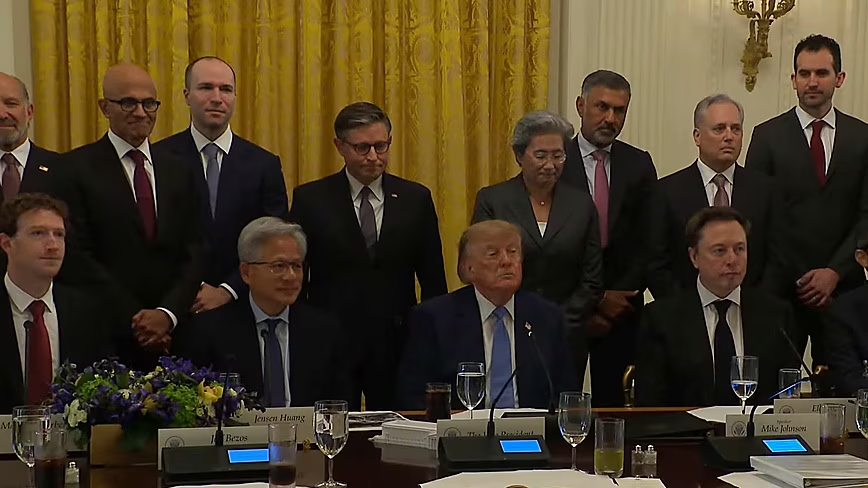
President Donald Trump attended a White House lunch with over two dozen tech leaders and emphasized strong support for companies to self-regulate AI technologies. He mentioned that there is a shared view among the executives that the industry should manage its own safety protocols. Additionally, Trump indicated plans to rename AI, reflecting his approach to the evolving technology landscape.
Companies can now develop OpenAI-powered agents that run completely within Amazon Web Services, ensuring their data remains securely inside AWS. This new capability, launched during OpenAI’s DevDay 2026 in San Francisco, is part of the Bedrock Managed Agents offering created by OpenAI in partnership with Amazon. Currently, this product is available in a limited preview, enabling businesses to leverage advanced AI agents without their data ever leaving the AWS environment.
Update as of 29 September 2026: This article now includes details about the regional availability of OpenAI's new AI agents, dots, along with feedback from an early user. Currently, Pro users located in the European Economic Area, Switzerland, and the UK won't have access to dots. OpenAI's dots are designed to operate continuously on their own cloud-based systems, enhancing AI interaction and efficiency.
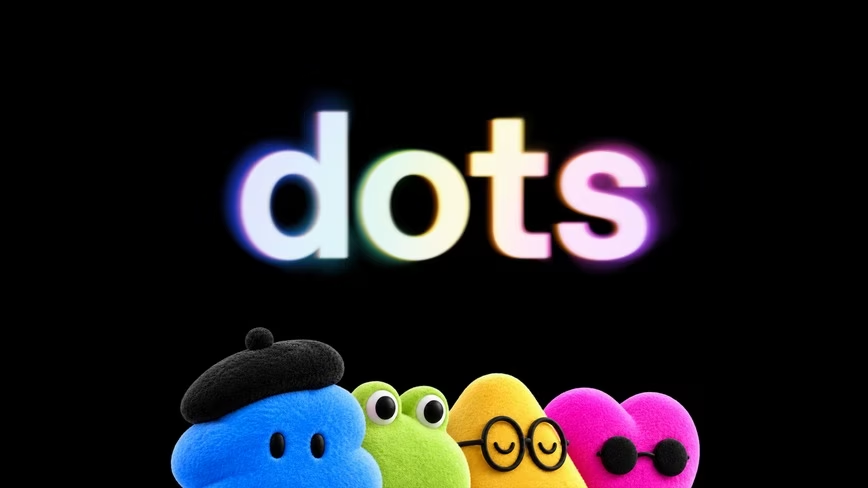

OpenAI hosted its highly anticipated DevDay on September 29th in San Francisco, where CEO Sam Altman presented several major updates. The spotlight was on Dots, OpenAI's new AI agent designed to compete with Meta’s Muse, though Dots will be exclusive to ChatGPT Pro, Business Premium, and Enterprise subscribers. Additionally, OpenAI introduced the GPT-6.1 Sol model, revealed that ChatGPT has reached 1.2 billion weekly active users, and launched a new premium ChatGPT Pro plan priced at $500 per month. This event comes amid growing concerns in the AI industry about security breaches, including hacks involving OpenAI’s own models, sparking discussions about a possible pause in AI progress. Follow our full DevDay 2026 coverage here.

At a MAHA Institute event, Kennedy and other experts emphasized the importance of making health data more accessible. They highlighted how unlocking this data can accelerate research on vaccines, chronic diseases, and autism, ultimately benefiting public health outcomes.