


France has committed an extra €1 billion to its quantum technology initiatives, intensifying the race alongside the US and European nations to lead advancements in computing, defense, and pharmaceutical research. This significant investment underscores the strategic importance of quantum technology in shaping future industries and national security.


Norway’s Government Pension Fund Global, the largest sovereign wealth fund worldwide, has chosen not to vote on John Elkann’s reappointment to Meta’s board. The fund expressed doubts about whether Elkann, who is Stellantis chairman and Exor CEO, can dedicate sufficient time to the responsibilities at Meta. Norges Bank Investment Management, which oversees the $2.3 trillion fund, highlighted these concerns as part of its governance stance.


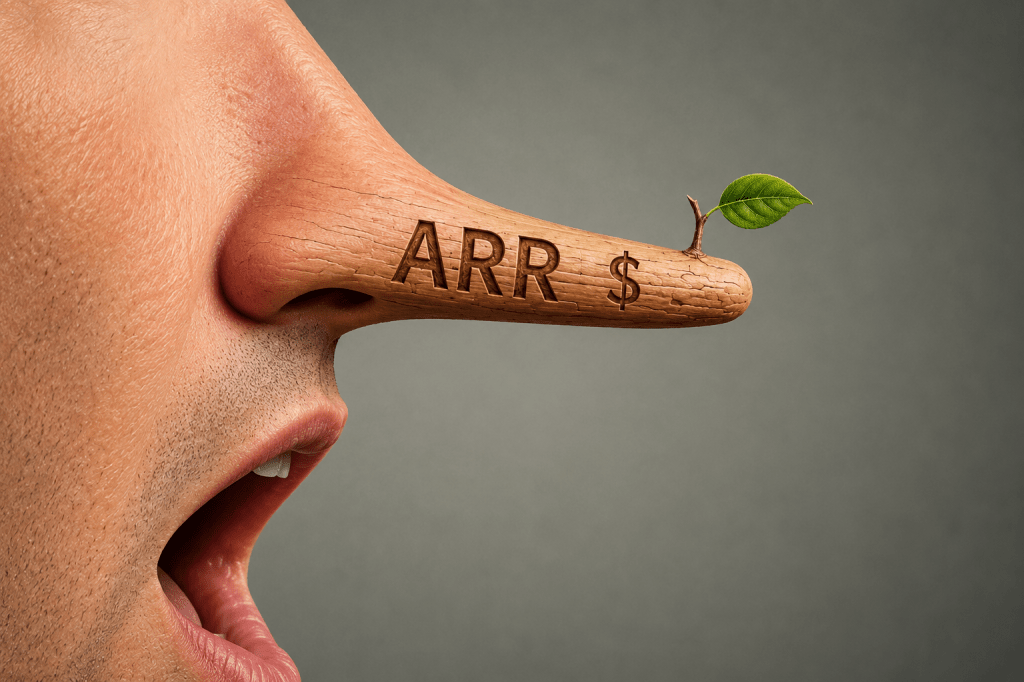
Certain AI startups are inflating traditional revenue figures like Annual Recurring Revenue (ARR) when presenting their progress to the public. Notably, investors are often complicit, fully aware of these stretched metrics but still using them to justify high valuations and excitement around these companies.

Explore the biggest startup funding events in the US for the week of May 18-22, 2026, highlighting over $100 million deals that shape the tech landscape. Leading the pack is MiRus, which secured a $1.5 billion corporate investment led by Boston Scientific for advanced orthopedic and spinal solutions. Hot on their heels, Hark raised $700 million in a Series A to pioneer personalized AI hardware, supported by industry giants like Nvidia and Intel Capital. Other significant funding rounds include Modal Labs' $355 million for AI infrastructure, Decart's and Amca’s $300 million deals in generative AI and aerospace defense, respectively, and Mercury’s $200 million Series D fueling fintech growth. These investments underline a strong trend in physical technology, frontier labs, and AI-driven innovations, reflecting robust investor confidence across sectors such as healthcare, AI, fintech, and aerospace. Stay tuned for the latest developments in startup innovation and funding.

Nuclear startup Deep Fission is preparing for an initial public offering aiming to raise $157 million. However, the company faces challenges convincing investors of its potential in the nuclear energy sector.


Artificial intelligence is rapidly transforming the landscape of white-collar jobs, with executive assistants facing significant disruption. Major firms like PwC, Deloitte, KPMG, EY, and McKinsey have begun reducing or relocating assistant roles, influenced by cost pressures and AI-driven automation. Traditionally stable and well-paid, these positions are now vulnerable as AI takes on administrative tasks. Research shows that secretarial roles, heavily populated by women, are particularly at risk and may struggle to transition to new jobs. The impact extends beyond professional services, threatening career pathways especially for non-college graduates who depend on administrative roles as entry points into better-paying white-collar work.

Moment, a fintech startup founded by former Citadel Securities quantitative traders and researchers, has successfully raised $78 million in a new funding round. This round was led by Index Ventures with support from returning investors Andreessen Horowitz and Avra. Previously, the company secured $36 million in July 2025. Moment focuses on developing infrastructure that enables wealth management firms to effectively implement AI operating systems, addressing gaps previously unmet by Wall Street.

Concerns are rising around new AI models like Anthropic's Mythos, prompting the European Central Bank (ECB) to urge banks' IT departments to take proactive measures. The goal is to address potential risks and ensure secure AI adoption within the financial sector.

The European Union mandated the sale of shares as part of antitrust conditions to approve Prosus' acquisition of Just Eat Takeaway. Prosus is now requesting the EU to lift this forced sale requirement on its stake in Delivery Hero.


SpaceX and OpenAI are accelerating toward public offerings, spotlighting a select group of tech leaders shaping AI's trajectory. Host Blake Montgomery of The Guardian recaps key developments over the past week, including SpaceX's ambitious $1.75 trillion IPO strategy that could elevate Musk to trillionaire status. Other highlights include Meta's workforce reshuffle focused on AI roles, Nvidia's revenue surpassing projections amid the AI surge, and OpenAI's recent mathematical breakthrough. These events underscore the rapid shifts in AI innovation and investment as market competition intensifies.
