



Atlassian's Research Reveals: Maximizing AI ROI Requires Team-Centric Adoption, Not Just Individual Use
Atlassian research shows that real AI value comes from team-level collaboration, not just individual use. Successful teams create shared contexts, redesign workflows, and foster a culture of experimentation. Organizations that treat AI as a team effort, with clear agreements and shared knowledge, achieve better ROI and higher quality outcomes.


Revamping Entry-Level Roles for the AI-Driven Workplace
As AI transforms the workplace, companies face the critical challenge of reshaping entry-level positions. It is essential to cultivate inexperienced employees into trusted decision-makers to meet evolving business needs in an AI-driven era.

Intuit’s AI Journey: Rebuilding Its Agent Architecture Twice in Four Months
Intuit rebuilt its AI agent architecture twice in four months due to complexity and error compounding in its earlier orchestration system. The new design emphasizes modular skills and tools, human-agent collaboration, and comprehensive customer feedback, resulting in improved performance and scalability.
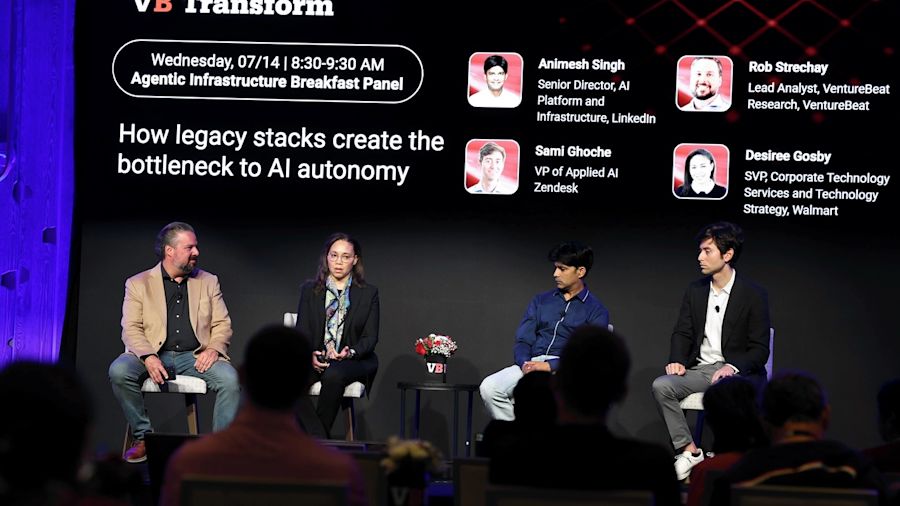
Bridging the Speed Gap: How LinkedIn, Walmart, and Zendesk Overcame Legacy Infrastructure Challenges to Accelerate AI Agents
At VB Transform 2026, leaders from LinkedIn, Walmart, and Zendesk revealed that legacy infrastructure—not AI models—is the main hurdle slowing AI agents. They shared strategies for modernizing workflows, managing data, and maintaining flexibility to keep pace with agent speeds, emphasizing early evaluation, employee empowerment, and owning adaptable infrastructure.


Verizon to Cut 3,000 Retail Jobs, Shift Stores to Franchise Model Amid AI Integration
Verizon is cutting 3,000 jobs in its corporate retail stores and shifting 274 locations to franchises as AI transforms customer service operations. This restructuring will leave the company with 1,000 stores under direct ownership and 5,000 operated by independent franchises, marking a significant shift in its retail strategy.

Walmart Invests in 10 High-Paying Jobs Resistant to AI Disruption
Walmart outlines a proactive approach to counter AI-driven workplace changes by focusing on 10 resilient job roles offering six-figure salaries. Their method emphasizes reducing employee turnover, enhancing loyalty, and developing leadership among future workforce, providing valuable insights for founders.


PepsiCo's Digital Twin Innovation: Revolutionizing Factory Efficiency
PepsiCo is transforming factory operations with digital twins—precise 3D models powered by AI—that simulate and optimize manufacturing processes. This approach boosts productivity, anticipates bottlenecks, and enhances agility, enabling global scaling through partnerships with Siemens and Nvidia. Digital twins also help PepsiCo quickly adapt to changing consumer demands and evolving supply chain challenges, positioning them for future success in a dynamic market.

Volkswagen to Cut Model Range by Half Amid Crisis, Job Cuts Unaddressed
Volkswagen announces significant reduction of its car model range by half and a drop in production capacity from 12 million to nine million vehicles annually. The company has not addressed the reported 100,000 job cuts amid this major transformation effort as it faces a severe crisis.


Ensuring Long-Term Success in Healthcare Digitisation
Sohini De of BearingPoint examines how healthcare digitisation can achieve lasting impact by focusing on key structural and organisational changes necessary for ongoing success in digital transformation.

Satya Nadella on Building Trust Amid AI-Driven Change: Leadership Starts with Five Words
Microsoft CEO Satya Nadella highlights that AI represents more than just a technological shift—it’s a pivotal test of trust for leaders. Effective leadership in this AI transformation hinges on the ability to earn and maintain trust from stakeholders. This mindset is essential as AI increasingly influences business and society.

Evolving Leadership Skills for the AI Era
AI is transforming leadership, requiring senior leaders to shift perspectives from mere technology adoption to strategic and ethical challenges. Emphasizing human judgment and soft skills will be key for navigating AI-driven change and leading organizational reinvention effectively.

From Statement to Strategy: How to Truly Embed Your Purpose in Your Organization
Many organizations craft purpose statements that fade into the background without real impact. True success comes from embedding purpose into decision-making, aligning projects, and maintaining accountability. This approach leads to greater engagement, measurable social impact, and financial growth, as seen in companies like Places for People and Kiwibank. Purpose activated through honest measurement and alignment offers a crucial competitive edge in today's complex environment.

How to Communicate Your AI-First Strategy Without Alienating Your Team
Effective communication about AI adoption is crucial to avoid damaging trust and morale. Leaders must be transparent about workforce changes and show empathy to navigate the transition smoothly.


GenAI Impact Beyond Time Savings: Transforming Work Dynamics in Higher Education
A four-year study at a U.S. public college shows that generative AI transformed work processes by enhancing clarity, decisiveness, and efficiency rather than merely saving time. AI helped executives communicate more decisively, enabled operational leaders to speed decision-making, and improved student-facing professionals’ resolution efficiency. These changes reduced unnecessary meetings and escalations, keeping staffing stable while boosting productivity and organizational resilience. Leaders should evaluate AI impacts by changes in work dynamics and communication rather than time saved alone.

Rethinking AI Adoption: Leading Change with Clarity and Care
AI adoption struggles stem from gaps between leadership expectations and employee realities. Understanding employee concerns, setting clear goals, connecting AI use to meaningful work, and integrating AI seamlessly into workflows can transform AI engagement from resistance to opportunity.

Why AI Strategy Can't Be Driven by Panic
Many organizations' AI strategies stem from panic rather than genuine transformation, leading to superficial implementations with poor ROI. Real success comes from redesigning workflows, empowering business users, and focusing on leveraging AI to create new value. Leaders must move beyond panic-driven actions to achieve lasting impact.


Why Bose is Reinventing Itself as an Entertainment Powerhouse
Bose is transitioning into the entertainment sector by establishing a new division. Their CMO's decision to avoid creative agencies for the last five years aligns with this strategic transformation, reflecting a bold, independent marketing approach that supports their evolving business model.

Leveraging AI as a Growth Multiplier in Finance
Artificial intelligence is fundamentally changing how financial institutions operate, compete, and interact with clients, offering unprecedented opportunities for growth and efficiency.

Rethinking Your Operating Model: Embracing Continuous Transformation and Leadership
Enterprise agility demands ongoing transformation, cross-functional accountability, and leadership that fosters a culture of learning and experimentation. Organizations must frequently update their operating models and align leadership to support change effectively. This approach equips businesses to navigate disruption and maintain a competitive edge in today’s dynamic market.

Irish CEOs Anticipate Broad Reskilling Amid AI-Driven Workforce Changes
Irish CEOs are optimistic about growth despite global uncertainties and expect widespread employee reskilling as AI technologies transform the workforce, according to the EY Ireland CEO Outlook survey.