


Navigating Multigenerational Dynamics in the Gen Z Workplace
This discussion highlights the challenges and opportunities of multigenerational workplaces, focusing on how leaders can leverage diverse expectations around leadership, communication, and AI to foster innovation and meet Gen Z's workplace needs.

GitLab Streamlines Operations and Staff to Enhance AI Platform Capabilities
GitLab is implementing significant organizational changes including a 14% staff reduction and exit from 22 countries to streamline operations. The company aims to bolster its infrastructure and management to scale its platform for AI workloads, positioning itself for future growth in AI technology.
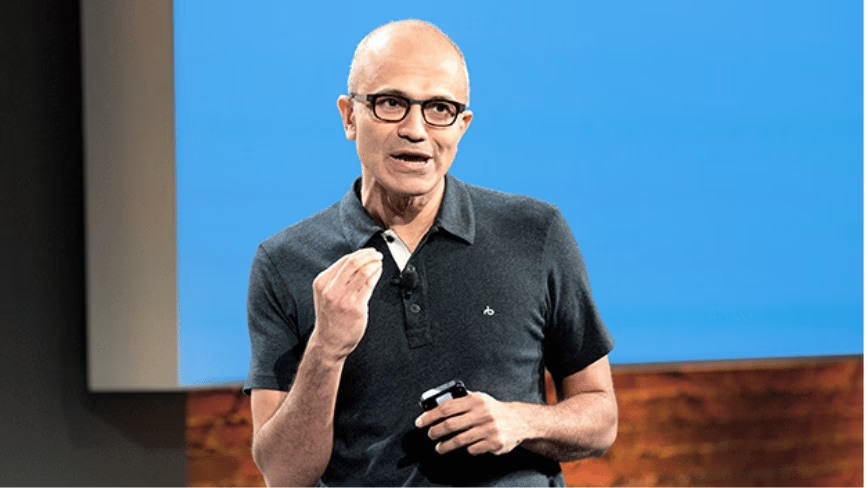

Microsoft Removes Key Employee Survey Question on Workplace Satisfaction
Microsoft eliminated a crucial employee survey question that gauged whether workers felt they received fair value for their efforts. This question historically helped the company respond to morale issues, marking a significant shift in how employee sentiment is measured internally.

Uber Reshapes HR Division with Nearly 25% Staff Reduction Under New President
In her new role, Jill Hazelbaker is swiftly implementing changes at Uber by reducing 23% of the People and Places division workforce, mainly senior roles, to realign the company’s human resources and workplace operations. This move reflects a strategic internal reshaping under Hazelbaker’s leadership.


McDonald's Unveils Ambitious Growth Strategy Amid Intensifying Market Competition
McDonald's, after achieving four straight quarters of growth, is actively updating its menu, store design, and drive-thru operations as part of a new growth strategy to maintain its competitive edge against rising rivals.

Rethinking Board Recruitment: Building Trust Before the Search
Board recruiting often recycles familiar names due to risk aversion, favoring proven leaders with executive experience. Most appointments happen through networking, not search firms. The key to real change is building trust and connections long before a search begins, fostering diverse and reliable board candidates through intentional relationship-building and dedicated management.

Uber Restricts Employee AI Expenditure After Rapid Budget Overspend
Uber initially promoted extensive AI use among employees but faced budget overruns in just four months, prompting the company to implement spending caps to manage costs effectively.


Chief Purpose Officers: Innovative Leadership or Passing Trend?
The article examines the evolving role of chief purpose officers, analyzing whether this position is a meaningful leadership innovation or just a temporary management trend, through insights from experts in management and law.

Survey Reveals AI’s Cost Savings in Big Companies Lag Behind Expectations
Bain & Co.'s survey of nearly a thousand large firms shows that AI-driven cost savings are falling well short of what executives had hoped, raising concerns about AI's current impact on business efficiency.


The Power of a No-Negotiation Salary Policy: Promoting Fair Pay while Attracting Top Talent
Implementing a strict no-negotiation policy on job offers fosters pay equity and fairness across your organization. This approach not only simplifies compensation planning but also reduces bias and disparities in pay. The key is to present this policy effectively to candidates, reassuring them of transparent and equitable pay practices, so your company remains competitive in attracting and retaining skilled professionals.


Scaling AI Through Dynamic and Contextual Governance
Effective AI governance demands adaptive, operationally embedded controls that match AI system types and evolving risks. By moving beyond static compliance to dynamic oversight and cross-domain collaboration, organizations can mitigate development and deployment risks, such as bias and error propagation, ensuring AI systems remain reliable and aligned with organizational goals as they scale.

Driving Large-Scale Value with Generative AI: Insights from Swiss Industry Leaders
A multi-year study of 23 Swiss companies highlights that scaling generative AI successfully requires an "AI spine"—a centralized, cross-functional team integrating domain and technical expertise which enables continuous improvement and cross-unit project coordination. This approach has driven significant efficiencies and new revenue streams in banking and medical coding sectors. Unlike traditional AI structures, the AI spine is independently funded and overseen by executives, ensuring agility and strategic alignment. The model emphasizes collaboration, measurable value, and agile iteration to maximize generative AI's transformational potential.

Cisco CEO Chuck Robbins on Leadership and Decision-Making: Embracing Speed and Learning from Mistakes
Chuck Robbins, CEO of Cisco for over a decade, has driven the company's shift to software and AI, stressing decisive action and open leadership. He highlights learning from mistakes, transparent communication, and rapid adaptation, especially amid AI-driven changes. His people-focused approach and cultural shifts aim to keep Cisco agile and innovative.

How AI is Transforming Software Development and Organizational Coherence
AI tools enable small teams to build software rapidly, but true success depends on organizational coherence — aligning product development, strategy, and customer experience. Coherence distinguishes winners in a crowded market, ensuring loyalty and consistent brand trust both by humans and intelligent AI agents.

Key Insights on Navigating Customer Reviews in Business
Recent studies reveal that customer reviews are influenced by gender bias, niche preferences, and inflated expert ratings. Women often refrain from posting negative reviews due to social pressure, user community feedback can misrepresent the wider audience, and expert endorsements may lead to unrealistic consumer expectations, complicating how companies should interpret and respond to reviews.

A Quick Guide to Minimizing AI-Driven Manipulation Risks
AI introduces new risks to human judgment through deception, misinformation, and reduced independent thinking. The "Think First, Verify Always" protocol urges employees to critically evaluate AI outputs by forming their own judgments first and always verifying AI information with other sources. This simple training significantly improves decision quality, ethical awareness, and verification accuracy, helping organizations build safer, more trustworthy AI practices.

How Manager Support Drives Success for Expat Employees
Research reveals cultural knowledge is less vital to expat success than social support, particularly from supervisors. Managers who actively support and integrate expats play a crucial role in helping them overcome challenges like discrimination and role ambiguity, leading to better adjustment and performance.


What CEOs Really Say About Mass Layoffs Behind Closed Doors
CEOs rarely apologize after mass layoffs but tend to offer excuses instead. Acknowledging responsibility openly could lead to more transparent leadership and improved corporate culture when managing workforce reductions.

After the Layoff: 5 Crucial Steps to Keep Your Team Intact
Layoffs affect both departing and remaining employees, who face emotional and workload challenges. Effective leadership is vital to help the remaining team manage these stresses and stay engaged. Here are five key actions leaders must take to prevent further turnover.

How Employee Collaboration Accelerates Business Success
This article explores the importance of fostering employee collaboration through effective systems, highlighting how collective effort rather than individual performance can drive faster and more sustainable business growth.