


How AI is Transforming the Role and Logic of Management
AI is reshaping management by enabling organizations to rethink leadership roles traditionally filled through promotion without proper training or data. By leveraging AI-driven workforce insights, managers can make data-informed decisions, improve team engagement, align strategy with execution, and enhance leadership development. This transition promises leaner management structures and stronger organizational performance, breaking the cycle of ineffective legacy approaches.

The Disappearing Entry-Level Jobs: How Education Must Adapt to Bridge the Skills Gap
AI is reducing entry-level job opportunities, creating a skills and experience gap for new graduates. Traditional entry-level roles that foster early career development are disappearing, making it vital for educational institutions to redesign curricula with real-world applications and continuous hands-on learning. Integrating technology like simulations and expanding experiential programs like co-ops and externships can help bridge this gap. Employers partnering with education can benefit from a better-prepared talent pipeline. To keep pace with changing job demands, education must evolve beyond traditional models to ensure young workers develop the skills needed for the future.


EY Report Highlights Rising Tech Talent Shortages Impacting Businesses
According to a recent EY report, businesses are encountering growing challenges in recruiting qualified tech talent, which is crucial for driving growth and innovation. This shortage is putting substantial pressure on organizations to fill critical roles and maintain competitive momentum.


US Tech Layoffs Reach Highest Point in Two Years in May, But There's More to the Story
Tech industry layoffs in the US hit a two-year peak in May, mainly due to AI-driven changes. Despite the high number of job cuts, the situation reflects a larger reshaping of the labor market, highlighting evolving employment trends beyond simple job losses.


Exploring the Impact of Employee Ownership in Business
Nineteen leaders weigh in on the practice of employee ownership, highlighting its potential to enhance employee engagement and drive company growth by aligning team members' interests with business outcomes.

The Evolving Role of Managers: Navigating Increased Demands and Emotional Strain
Middle managers are facing growing challenges in their roles, including increased workloads, mental health struggles, and a lack of support. Surveys show many feel unprepared to support their teams' wellbeing amidst fears of AI-driven layoffs and job insecurity. Leaders must acknowledge these pressures, promote open conversations about mental health, and provide training tailored to the realities managers face today. Supporting managers is essential for organizational success and workforce health.


Meta to Allow Employees Short Breaks from Workplace Monitoring
Meta has revised its employee monitoring policies after backlash, now allowing staff to temporarily disable tracking software on their work devices for half-hour periods. This change follows strong internal dissent against mandatory AI training data collection practices.

Navigating Multigenerational Dynamics in the Gen Z Workplace
This discussion highlights the challenges and opportunities of multigenerational workplaces, focusing on how leaders can leverage diverse expectations around leadership, communication, and AI to foster innovation and meet Gen Z's workplace needs.


GitLab Streamlines Operations and Staff to Enhance AI Platform Capabilities
GitLab is implementing significant organizational changes including a 14% staff reduction and exit from 22 countries to streamline operations. The company aims to bolster its infrastructure and management to scale its platform for AI workloads, positioning itself for future growth in AI technology.
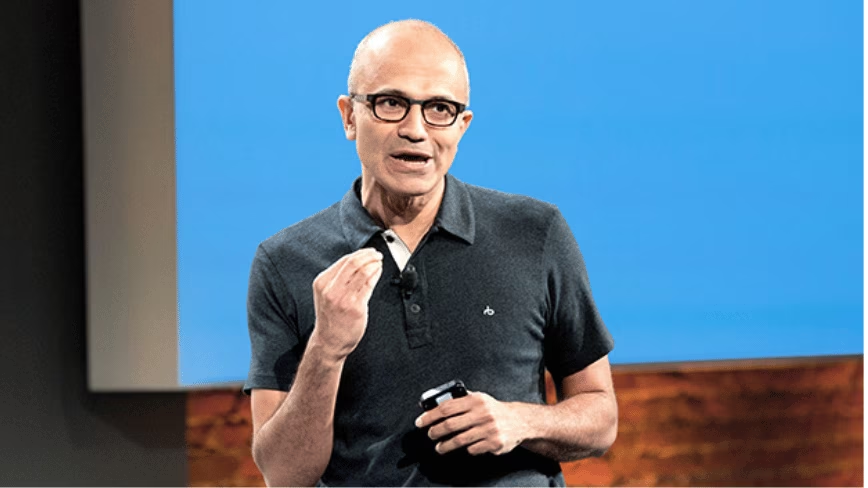
Microsoft Removes Key Employee Survey Question on Workplace Satisfaction
Microsoft eliminated a crucial employee survey question that gauged whether workers felt they received fair value for their efforts. This question historically helped the company respond to morale issues, marking a significant shift in how employee sentiment is measured internally.

Uber Reshapes HR Division with Nearly 25% Staff Reduction Under New President
In her new role, Jill Hazelbaker is swiftly implementing changes at Uber by reducing 23% of the People and Places division workforce, mainly senior roles, to realign the company’s human resources and workplace operations. This move reflects a strategic internal reshaping under Hazelbaker’s leadership.

Report Reveals Companies Struggling to Adapt as AI Reshapes the Workplace
A recent BCG report highlights that while AI is transforming jobs at a fast pace, many companies are struggling to effectively leverage AI to create significant value across their organizations. This gap reveals the challenges businesses face in adapting to technological changes.


Indeed Launches 'Jobs Need People' Campaign Highlighting Genuine Workplace Connections
Indeed's new campaign shines a light on the value of genuine human connections at work, offering a hopeful response to modern challenges like employer ghosting by focusing on what truly makes work fulfilling.


Colorado Governor Rejects Bill Restricting Surveillance-Based Wage and Price Algorithms
Colorado Governor Jared Polis vetoed a bill that would have banned the use of surveillance pricing algorithms for setting wages and consumer prices, drawing criticism from consumer advocates who say he favored corporate interests. The bill was set to be the strongest U.S. law against algorithmic pricing methods, following Maryland's narrower ban in grocery stores.

Chief Purpose Officers: Innovative Leadership or Passing Trend?
The article examines the evolving role of chief purpose officers, analyzing whether this position is a meaningful leadership innovation or just a temporary management trend, through insights from experts in management and law.

The Power of a No-Negotiation Salary Policy: Promoting Fair Pay while Attracting Top Talent
Implementing a strict no-negotiation policy on job offers fosters pay equity and fairness across your organization. This approach not only simplifies compensation planning but also reduces bias and disparities in pay. The key is to present this policy effectively to candidates, reassuring them of transparent and equitable pay practices, so your company remains competitive in attracting and retaining skilled professionals.


A Quick Guide to Minimizing AI-Driven Manipulation Risks
AI introduces new risks to human judgment through deception, misinformation, and reduced independent thinking. The "Think First, Verify Always" protocol urges employees to critically evaluate AI outputs by forming their own judgments first and always verifying AI information with other sources. This simple training significantly improves decision quality, ethical awareness, and verification accuracy, helping organizations build safer, more trustworthy AI practices.

How Manager Support Drives Success for Expat Employees
Research reveals cultural knowledge is less vital to expat success than social support, particularly from supervisors. Managers who actively support and integrate expats play a crucial role in helping them overcome challenges like discrimination and role ambiguity, leading to better adjustment and performance.


What CEOs Really Say About Mass Layoffs Behind Closed Doors
CEOs rarely apologize after mass layoffs but tend to offer excuses instead. Acknowledging responsibility openly could lead to more transparent leadership and improved corporate culture when managing workforce reductions.

After the Layoff: 5 Crucial Steps to Keep Your Team Intact
Layoffs affect both departing and remaining employees, who face emotional and workload challenges. Effective leadership is vital to help the remaining team manage these stresses and stay engaged. Here are five key actions leaders must take to prevent further turnover.