



Tech Job Openings Rise Amid Growing AI Investment
Contrary to fears of AI displacing tech workers, job openings in the tech sector are on the rise. Increased investments in AI technology are fueling demand for hardware and supporting robust software hiring, indicating a resilient job market.

Amazon Exec Highlights Rarity of Forward-Deployed Engineer Talent: ‘These Professionals Are Unicorns’
An Amazon Web Services executive described the challenge of recruiting forward-deployed engineers, referring to these specialists as 'unicorns' due to their scarcity and the high selectivity in hiring them to expand AWS’s engineering capabilities.


GM's Strategy: Building Talent from Within and Why It Matters
GM is shifting its approach from searching for talent externally to building a strong internal talent pipeline, emphasizing long-term growth and stability. This strategy highlights the importance for businesses to invest in workforce development rather than solely relying on hiring new employees.


California Enacts Groundbreaking Laws to Shield Workers from AI Job Risks
California has introduced progressive laws to protect workers from AI-driven job risks, banning exclusive AI use in layoffs, emotional monitoring, and neural data collection. These rules also require transparency on AI's role in layoffs and restrict AI surveillance in bathrooms, marking a significant step in workplace AI regulation.


Stripe to Create 200 New Jobs at Dublin Headquarters
Stripe is set to add 200 new jobs at its Dublin headquarters, highlighting its ongoing investment in Irish talent as a key part of its growth strategy.


Nurses Struggle with Scheduling Errors Amid New AI Software Rollout
A prominent healthcare provider adopted Palantir's AI scheduling software to streamline staff management but nurses report it has introduced errors and burnout, sparking safety concerns.


The Hidden Costs of AI: Workers Manage Bots Without Extra Pay
More employees are managing AI bots without additional pay or job title adjustments, according to a new report, shedding light on the unrecognized workload in the evolving workplace.


Rethinking Entry-Level Marketing Roles as AI Shifts Industry Demands, Says Gartner
Gartner predicts that AI will transform marketing roles by 2030, reducing the need for traditional entry-level jobs. Instead of cutting these positions, the recommendation is to empower new hires with more responsibility to foster development and meet evolving market needs.

The Rise of AI Agents in the Workplace: Are We Ready?
AI agents are increasingly becoming part of the workforce, signaling a significant change in workplace interactions. Organizations need to adapt to new collaboration models to effectively integrate AI colleagues, ensuring a smooth transition and maximizing the potential of this technology.

Disney Encourages Employees to Use AI for Performance Reviews Amid Potential Challenges
Disney has introduced the use of AI chatbots for employees to assist in crafting their annual self-reviews, highlighting a technological shift in performance evaluations. However, this strategy may present challenges, including potential drawbacks in AI-driven assessments.


2026 Tech Layoffs Surge as AI Investment Rises and Spending Shifts
In 2026, U.S. tech layoffs surged past 2025 levels, driven by companies shifting spending towards AI and restructuring to cut costs. With over 94,000 jobs lost by August, major firms like Amazon and Meta led the cuts. AI is a key factor in layoffs, both replacing some roles and shifting hiring towards AI-focused jobs. While layoffs slowed mid-year, the tech sector remains the highest for job cuts in 2026, reflecting a major industry transformation with potential new opportunities in AI.


5 Essential Strategies to Build a Resilient and High-Performing Team
Dr. André Martin outlines five key strategies for building teams that are confident, collaborative, and resilient amidst rapid change. By focusing on collective performance, meaningful contributions, borrowed expertise, and shared leadership, teams can thrive even in uncertainty.

Workday Roundtable Highlights Gender Gap in AI Leadership Roles
At a recent Workday roundtable in Dublin, industry leaders explored the slow progress in closing the gender gap in AI leadership, emphasizing that women still occupy only one in eight such roles. The conversation also covered AI adoption hurdles and the critical need for workforce reskilling.

The Hidden Crisis in Tech Layoffs: AI Reveals a Deeper Workforce Decline
Tech mass layoffs reveal a deeper issue: a long-term decline in labor participation worsened by AI fears. Despite many unemployed, the official rate remains low as workers exit the workforce. This trend, ongoing for decades, threatens economic stability and demands focus on labor participation as a key economic indicator. Companies using AI to empower employees, not replace them, will be best positioned for the future.

Study Finds AI May Reduce Professional Tone in Women's Emails and Applications
A Johns Hopkins study reveals that AI chatbots respond differently to gender-specific language in emails and job applications, potentially making women's communications appear less professional and impacting workplace interactions.


US Employers Rely on Software to Penalize Workers at a Rate Far Exceeding Europe, Driven by Legal Differences
An OECD survey highlights a vast difference in employee monitoring practices: 67% of US firms use software to discipline workers, while only 4% of European firms do. The disparity also extends to monitoring workplace conversations, driven largely by contrasting legal regulations in the US and Europe.
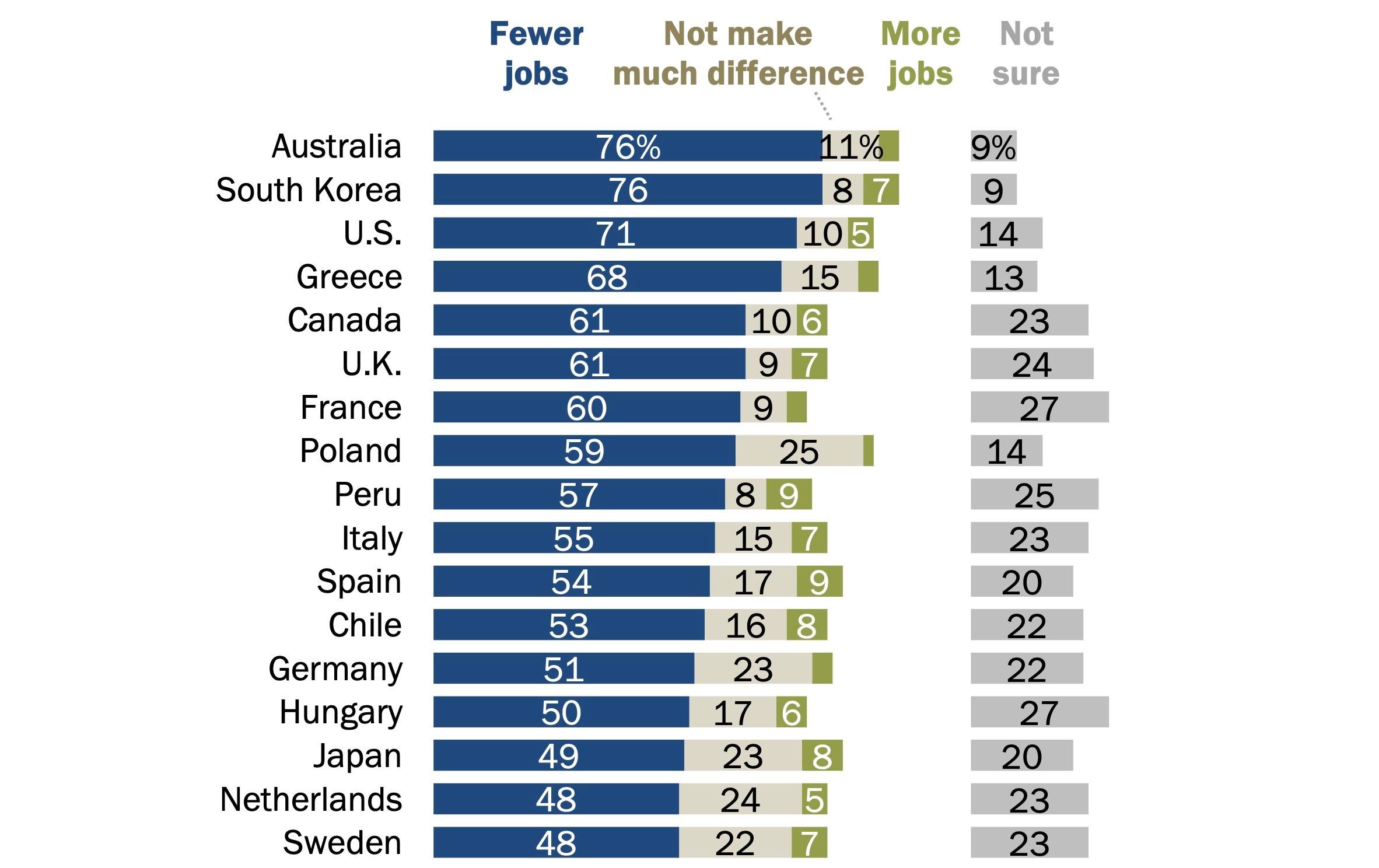

Global Concerns Mount Over AI's Impact on Employment
A Pew Research survey involving over 42,000 people across 37 countries shows that in 34 countries, the majority expect AI to cause job losses rather than create new jobs over the next 20 years, with the greatest concern in wealthier nations. This reflects significant global apprehension about AI's impact on employment.

Uber Cuts 20% of Its Managers: A Cautionary Tale for Other Companies
Uber's decision to cut 20% of its management team highlights the potential downsides of flatter organizational structures. While these setups aim to lower costs and accelerate decision-making, they may also eliminate crucial managers who ensure strategies are effectively implemented.

McKinsey Prioritizes Technical Talent Over Traditional MBAs
McKinsey is evolving its hiring strategy by focusing on recruiting more technically skilled engineers rather than relying primarily on traditional MBA holders. This shift reflects the firm's commitment to strengthening its technical capabilities to better serve client needs.

Oracle CFO Addresses Layoffs, Suggests 'Doing More with Less' Isn't Always Effective
Oracle's CFO spoke candidly in an all-hands meeting, cautioning against the mindset of 'doing more with less' as a catch-all solution. This statement coincides with the company's latest round of layoffs, highlighting ongoing organizational changes. The CFO's message suggests a need for thoughtful management beyond mere cost-cutting.