

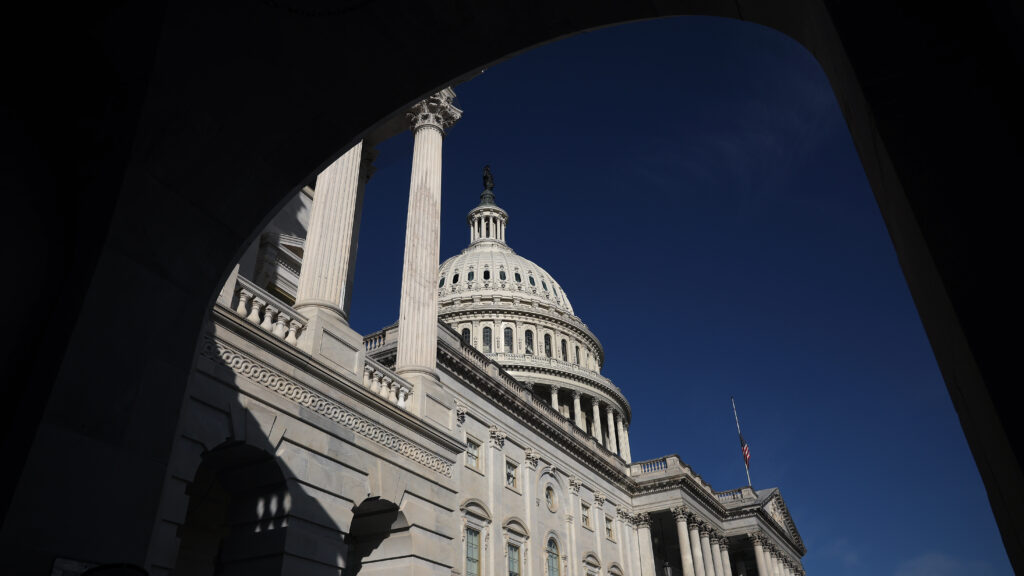

GOP Opposes Ending Medicare AI Prior Authorization Pilot
The Trump administration launched a pilot using AI to simplify Medicare prior authorization for some medical procedures. However, attempts to terminate this program have been thwarted by GOP lawmakers, keeping the AI-driven initiative active for now.


AI Reveals the Hidden Pace of Organizational Decision-Making
AI technology is shedding light on an uncomfortable reality within companies: decisions are often made slower than necessary. Instead of slowing down decision-making, AI exposes the existing inefficiencies and pushes organizations to confront their internal pace. This revelation is prompting companies to reassess and improve how quickly and effectively they operate.

Stripe Proposes $53 Billion Acquisition of PayPal: Impact on the Payments Industry
Stripe's potential $53 billion purchase of PayPal would unite two payment giants, creating a powerhouse processing $3.7 trillion yearly, reshaping the global online payments landscape.


S&P 500 Firms with Strong AI Strategies See Significant Stock Gains: Insights from New Research
A study of 449 companies shows that those with strong CEO involvement and clear AI rollout plans see significant stock gains, with top performers gaining 10.8% alpha post-announcement. Poorly communicated AI strategies risk hurting stock returns, emphasizing the importance of thorough preparation and follow-through.

How Embracing AI in Hiring Transforms Talent Evaluation
Warp revolutionizes hiring by allowing candidates to use AI tools during interviews, revealing that sound judgment and problem-solving skills are more crucial than AI prompt mastery. This approach prioritizes real-world skills and deep understanding over execution speed, reflecting how AI transforms talent evaluation in the modern workplace.


UK Regulator Launches Investigation into TikTok's Child Safety Measures
The UK’s Ofcom is investigating TikTok for inadequate age verification, fearing the platform exposes children to harmful content despite new online safety laws. The probe highlights ongoing challenges in protecting young users online.
TSMC Pledges $100 Billion More to U.S. Chip Manufacturing Expansion
TSMC is investing an extra $100 billion in the U.S. to expand advanced chip manufacturing, totaling $265 billion committed. This move supports rising AI-related demand, fosters the U.S. semiconductor ecosystem, and is expected to create high-paying tech jobs. The company is also raising its capital expenditure and revenue forecasts amid record profits.


Moonshot AI Unveils Kimi K3: The World's Largest Open-Source AI Model Challenging Leading U.S. Systems
Moonshot AI introduces Kimi K3, a 2.8-trillion-parameter open-source AI model that rivals top U.S. systems. Featuring cutting-edge architecture and autonomous capabilities, Kimi K3 elevates China's position in the AI global race and offers enterprises a powerful option beyond proprietary platforms. This release marks a pivotal moment as open-source AI narrows the gap with proprietary technology, reshaping future AI innovation and enterprise use.

The AI Infrastructure Investment Surge: Enterprises Struggle to Track Costs and Optimize Efficiency
Enterprises are rapidly investing in AI infrastructure faster than they can measure costs or optimize usage. Most rely on hyperscalers but plan to shift toward specialized AI clouds. Low GPU utilization and limited cost tracking create a "compute gap," with 64% planning provider changes within a year. As AI inference shifts focus from compute to memory, many remain unprepared, risking inefficiency amid growing AI deployment.

Closing the Agent Security Gap: Over Half of Enterprises Face AI Agent Security Challenges Amidst Credential Sharing
Over half of enterprises have experienced AI agent security incidents, mainly due to shared credentials and insufficient identity controls. Most rely on provider-native security tools but invest minimally in dedicated AI agent security. Despite high satisfaction with current solutions, many plan to upgrade tools soon, underscoring the urgent need to address identity and isolation gaps to better contain AI agent risks.

Bridging the Trust Gap: Why Enterprise AI Struggles More with Confidence than Access
A majority of enterprises face a critical trust gap with AI agents delivering confident yet incorrect answers due to inconsistent context. While retrieval-augmented generation leads as the primary method for feeding AI business context, gaps in governed semantic layers and reliance on provider-native tools create a reliability challenge. Hybrid retrieval systems and semantic governance are emerging solutions, but most organizations are still building these foundations, resulting in AI agents running ahead of trusted context.

The Evaluation Discrepancy in Enterprise AI: Autonomy Outpaces Trust Yet Deployment Advances
Enterprises are granting AI agents more autonomy than they trust their evaluation processes to support. Half have deployed agents that passed tests but failed in production. Trust in automated evaluations is low due to poor real-world alignment, yet two-thirds allow production deployment without human oversight. The evaluation tools are fragmented, and investment trends highlight a dual approach: automating deployment while increasing human review and observability. The core issue is an evaluation gap, not a coverage problem, putting enterprises at risk of scaling failures as autonomy outpaces assurance.

Agentic Orchestration in Enterprises: Deployment Challenges Overshadow Platform Issues
Enterprises are consolidating AI agent orchestration on top model platforms, led by Anthropic’s Claude, driven by model quality and task reliability. However, most agents remain basic chatbot wrappers rather than multi-step orchestrated workflows. Concerns about vendor lock-in shape a hybrid control strategy, with investments focused on workflow tooling and security. Real-time cost control lags behind, reflecting a gap between orchestration ambitions and deployment realities as enterprises transition from experimentation to consolidation.


Navigating Sovereign AI: What CEOs Must Prioritize for Global Success
Multinational companies adopting AI face complex sovereign AI regulations, requiring strategic CEO-level decisions about accountability, operational sovereignty, and partnerships. Sovereign AI varies by industry, nation, and use case, calling for hybrid approaches that balance global consistency with local compliance. Leading firms treat sovereignty as a strategic advantage, integrating local AI ecosystems and selectively collaborating with global and local providers to navigate fragmented regulations and geopolitical risks.


OpenAI's Latest Model Reports File Deletion Issues, Users Alerted
Users have raised concerns on social media about OpenAI's GPT-5.6 Sol deleting files without warning. OpenAI confirmed this problem in June, acknowledging the unexpected file deletions caused by the model.

Anthropic's Latest Ad Stirring Unease Amid Ethical AI Messaging
Anthropic's latest advertisement highlights its ethical stance in AI by addressing common criticisms, but the campaign has unsettled many viewers, raising questions about its effectiveness and impact.

Major Publishers File Lawsuit Against Google Over AI Training Practices
Leading publishers have initiated a lawsuit against Google, accusing the tech giant of utilizing copyrighted works without authorization to train its AI technology. The legal dispute highlights ongoing tensions around intellectual property rights in the development of artificial intelligence.

DeepMind CEO Proposes Independent Regulatory Body for Advanced AI Models
DeepMind CEO Demis Hassabis advocates for a dedicated independent standards organization to oversee the testing and ethical release of advanced AI models, aiming to set best practices and enhance safety in frontier AI development.

DeepSeek Plans $1.5 Billion Fundraising Ahead of 2027 IPO
DeepSeek, a leading Chinese large language model developer, is preparing for a 2027 IPO and seeking to raise $1.5 billion, targeting a valuation of $71 billion.

Meta's Adam Mosseri Predicts AI Token Spending Caps for Engineers
Adam Mosseri of Meta foresees a future where AI token spending is regulated within companies, with engineers potentially receiving capped budgets to manage AI tool costs efficiently, similar to how payroll is managed.