



5 Essential Strategies to Build a Resilient and High-Performing Team
Dr. André Martin outlines five key strategies for building teams that are confident, collaborative, and resilient amidst rapid change. By focusing on collective performance, meaningful contributions, borrowed expertise, and shared leadership, teams can thrive even in uncertainty.


Workday Roundtable Highlights Gender Gap in AI Leadership Roles
At a recent Workday roundtable in Dublin, industry leaders explored the slow progress in closing the gender gap in AI leadership, emphasizing that women still occupy only one in eight such roles. The conversation also covered AI adoption hurdles and the critical need for workforce reskilling.

The Hidden Crisis in Tech Layoffs: AI Reveals a Deeper Workforce Decline
Tech mass layoffs reveal a deeper issue: a long-term decline in labor participation worsened by AI fears. Despite many unemployed, the official rate remains low as workers exit the workforce. This trend, ongoing for decades, threatens economic stability and demands focus on labor participation as a key economic indicator. Companies using AI to empower employees, not replace them, will be best positioned for the future.


Study Finds AI May Reduce Professional Tone in Women's Emails and Applications
A Johns Hopkins study reveals that AI chatbots respond differently to gender-specific language in emails and job applications, potentially making women's communications appear less professional and impacting workplace interactions.


US Employers Rely on Software to Penalize Workers at a Rate Far Exceeding Europe, Driven by Legal Differences
An OECD survey highlights a vast difference in employee monitoring practices: 67% of US firms use software to discipline workers, while only 4% of European firms do. The disparity also extends to monitoring workplace conversations, driven largely by contrasting legal regulations in the US and Europe.
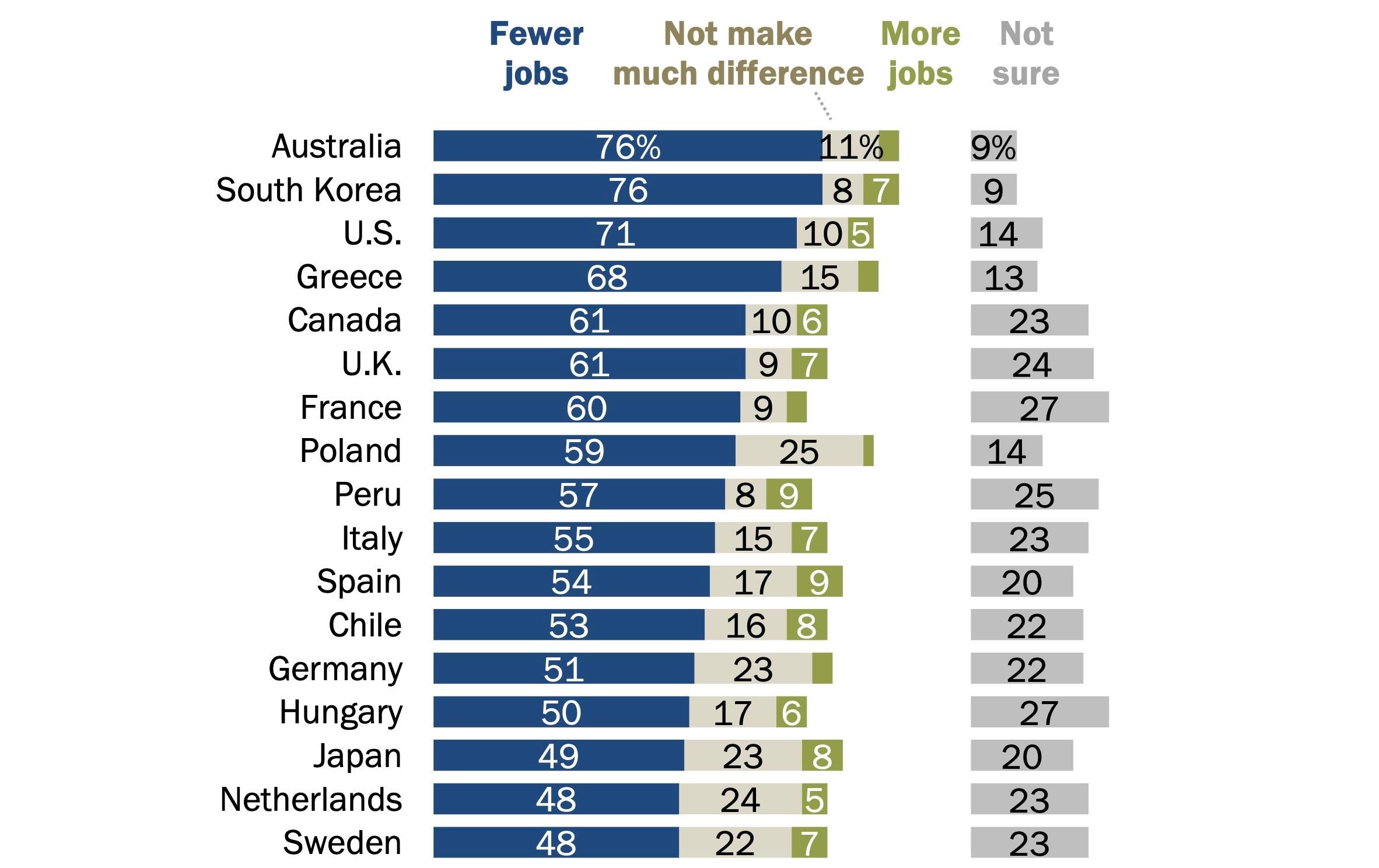

Global Concerns Mount Over AI's Impact on Employment
A Pew Research survey involving over 42,000 people across 37 countries shows that in 34 countries, the majority expect AI to cause job losses rather than create new jobs over the next 20 years, with the greatest concern in wealthier nations. This reflects significant global apprehension about AI's impact on employment.


Uber Cuts 20% of Its Managers: A Cautionary Tale for Other Companies
Uber's decision to cut 20% of its management team highlights the potential downsides of flatter organizational structures. While these setups aim to lower costs and accelerate decision-making, they may also eliminate crucial managers who ensure strategies are effectively implemented.

McKinsey Prioritizes Technical Talent Over Traditional MBAs
McKinsey is evolving its hiring strategy by focusing on recruiting more technically skilled engineers rather than relying primarily on traditional MBA holders. This shift reflects the firm's commitment to strengthening its technical capabilities to better serve client needs.

Oracle CFO Addresses Layoffs, Suggests 'Doing More with Less' Isn't Always Effective
Oracle's CFO spoke candidly in an all-hands meeting, cautioning against the mindset of 'doing more with less' as a catch-all solution. This statement coincides with the company's latest round of layoffs, highlighting ongoing organizational changes. The CFO's message suggests a need for thoughtful management beyond mere cost-cutting.

Research Shows Majority of AI Job Listings Demand Skills Beyond Job Titles
A study by Andela of over 47,000 technical job ads from major companies uncovers that more than half of AI positions require skills not explicitly mentioned in the job titles, highlighting a shift in hiring practices within the AI sector.


Why Hiring Transparency is Crucial: The Hidden Cost of Losing Top Talent
Poor communication during hiring—such as ghost jobs and vague pay details—is costing companies the best candidates. Building transparency fosters trust, which is now essential for recruitment success and gaining a competitive advantage.

AI is Transforming Work Dynamics, Not Just Replacing Jobs
AI is not merely replacing jobs; it is fundamentally restructuring work by breaking down traditional roles into tasks and capabilities. This shift challenges organizations to find new ways to develop expertise, especially as AI takes over repetitive entry-level tasks. Successful workforce strategies will focus on capability ecosystems, strategic use of workforce data, and intentional work redesign that balances AI efficiency with human creativity and judgment.

Transformation Happens Beyond the Boardroom: Empowering Frontline Managers
True transformation occurs not in executive meetings, but in the daily decisions of frontline managers. Success depends on simplifying complex workforce data and integrating transformation into everyday workflows. AI can accelerate this only if supported by connected data and real-time insights. Leaders must focus on removing complexity, enabling managers to lead effectively and making new ways of working the easiest and most natural choice.

Meta Reinstates Management Roles for Some Applied AI Employees in Latest Restructuring
Meta is reversing its flattened team approach by asking certain Applied AI employees to return to managerial roles, highlighting a strategic shift in its organizational structure.

Strategically Rebuilding Your Workforce in the Age of AI Layoffs
AI-driven layoffs present an opportunity for companies to rethink and improve their workforce strategy. By strategically integrating AI, organizations can enhance how work is performed and build a more resilient team for the future.

Enhancing Remote Team Performance Without Enforcing Office Days
Leaders can improve remote team performance by focusing on clear objectives for office time and measuring outcomes like productivity, retention, work quality, and communication, without enforcing strict office attendance policies.

The Value of Good Followers Versus Ineffective Leaders
Effective leadership requires more than just holding power; good followers play a critical role by supporting, challenging, and enhancing team performance. Many leaders are promoted beyond their abilities, highlighting the need to value followership alongside leadership. Organizations should reward exceptional followers to improve overall success.

The Aging Workforce Dilemma: Why Baby Boomers Are Staying on the Job—and Why It Matters
Contrary to forecasts, Baby Boomers are delaying retirement, leading to significant succession and workforce planning challenges for companies. The anticipated wave of retirements did not materialize, forcing organizations to adapt to an aging workforce staying active in the labor market.

Reimagining Org Charts for Today’s Dynamic Work Environment
New research reveals that classic organizational charts no longer align with how modern work gets done. Leaders should focus on incremental adjustments that improve functionality before attempting large-scale structural changes.

Australia's Victoria Proposes Law to Guarantee Work-from-Home Rights
Victoria, Australia is considering a law that would guarantee eligible workers the right to work from home two days per week, shifting the burden onto employers to justify in-person attendance. This move contrasts with other countries where remote work is a request-based right and faces political and legal opposition over employer autonomy and constitutional authority. The debate highlights a global divide on whether workplace flexibility is a right or a perk, with the U.S. unlikely to follow soon due to different labor laws.