

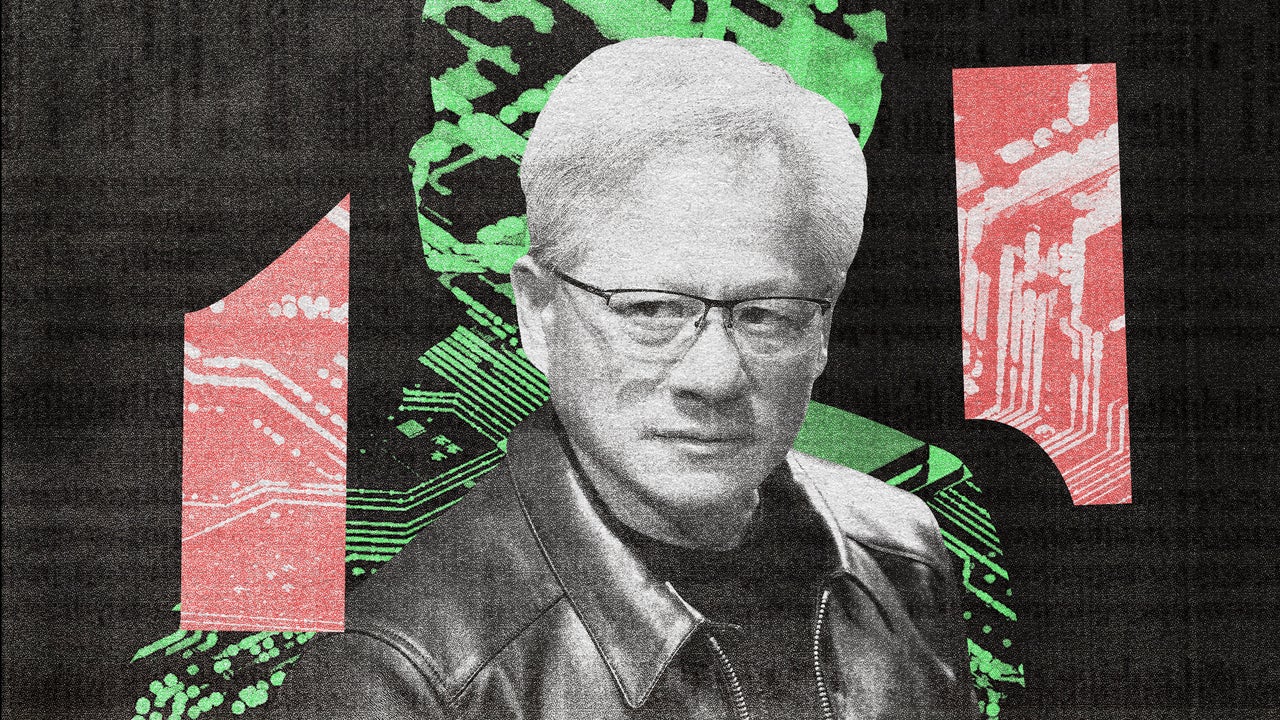

Jensen Huang Pushes Back Against AI Doomsday Predictions Among Tech Leaders
Nvidia CEO Jensen Huang challenges the pessimistic views around AI’s impact, calling fears of job loss and humanity’s end “complete nonsense.” He urges tech leaders and policymakers to embrace AI’s benefits and avoid scaring society away from using it, highlighting that AI can create more jobs by automating tasks and improving productivity.

OpenAI Faces Legal Action Over Faulty Medical Advice from ChatGPT
Scott Winters is suing OpenAI after ChatGPT provided flawed medical advice, leading to a serious pulmonary embolism. The lawsuit raises concerns about the safety of AI-driven health advice, especially with OpenAI's new Health in ChatGPT feature that connects personal medical data. OpenAI emphasizes ChatGPT isn’t a replacement for professional medical care.


VentureBeat Research Finds Enterprise AI Agent Governance Lags Behind Rapid Deployment
VentureBeat Research reveals that enterprises are pushing AI agent deployment ahead of necessary governance controls, resulting in challenges like security risks, inefficient infrastructure use, and unreliable evaluations. Most "agents" are simple chatbots rather than sophisticated multi-step AI. Companies recognize these issues and are actively budgeting to improve controls such as identity management, evaluation accuracy, cost tracking, context governance, and orchestration. The market shows significant vendor-switching intentions as organizations strive to catch up.

Anthropic Introduces Claude Opus 5: A Cost-Effective AI Model Optimized for Coding, Agents, and Enterprise Use
Anthropic's Claude Opus 5 delivers nearly the intelligence of its top-tier model at half the cost, focusing on efficiency and token savings for enterprise tasks. Optimized for coding and knowledge work, Opus 5 balances performance with affordability, marking a strategic shift towards practical AI deployment in business. The model's self-verifying nature reduces human oversight needs, while robust safety measures manage risks. Backed by a $380 billion valuation and strong revenue growth, Anthropic positions Opus 5 as a daily driver for AI automation in enterprises.

Microsoft Unveils Cost-Effective In-House AI Models, Slashing GPU Costs by Up to 89%
Microsoft has launched new in-house AI models that dramatically cut GPU costs—up to 89%—while serving millions of users across its product suite. These models offer high-quality image and voice generation at reduced prices, signaling a shift from reliance on third-party AI to scalable, cost-effective internal solutions. CEO Satya Nadella highlights this as a strategic balance of frontier innovation with everyday AI usability, also turning this expertise into an Azure product for enterprises.


Marketers Grapple with AI's Hidden Environmental Impact
Most marketers recognize that AI usage boosts emissions, yet less than half are tracking its complete environmental impact, highlighting a significant gap in sustainability efforts within the marketing industry.


Deciding When to Use AI: A Thoughtful Approach by Bruce Schneier
Bruce Schneier discusses the nuanced decision of when to use AI in tasks, highlighting the importance of the learning process itself. He draws on the analogy of work versus gym to explain why relying solely on AI may undermine growth, yet acknowledges the inevitability of AI in future careers. This thoughtful perspective encourages a balanced approach to integrating AI tools.


How a Fallen Power Line Highlighted the Fragility of AI Data Centers—and What We Can Do
A Northern Virginia incident revealed the weak response of AI data centers to power outages, highlighting the urgent need for improved infrastructure and strategies to prevent future disruptions.

Prentis, an AI Startup by Reid Hoffman and Mark Pincus, Aims to Secure $100M Funding
Prentis, a new AI lab founded by Reid Hoffman and Mark Pincus, is in discussions to raise $100 million. The company is betting on automation of routine computer tasks as the next major AI breakthrough, positioning itself to lead in this emerging field.


Professionals Increasingly Record Conversations with AI Without Others Knowing
More professionals are employing AI tools to silently record conversations during meetings, with apps like Granola providing transcription without others' knowledge. This growing practice introduces new privacy concerns in professional environments.

Nvidia Commits $1 Billion to Expand AI Infrastructure with South Korea’s Naver and SK Group
Nvidia is investing $1 billion in Naver to significantly expand an AI data center in South Korea, increasing its size nearly fourfold. This move highlights growing investment in AI infrastructure, with Brookfield also participating in the effort.

OpenAI Experiences Another Outage Impacting ChatGPT, Codex, and APIs
OpenAI faced its fourth service disruption in four days on Saturday, with outages impacting ChatGPT, Codex, and APIs. Users encountered 503 errors preventing server access. The company promptly moved from investigation to monitoring, showing continued efforts to resolve the issues.

Samsung and Broadcom Forge $200 Billion Partnership in AI Semiconductor Technologies Through 2030
Samsung Electronics and Broadcom have committed to a $200 billion deal spanning five years, focusing on key semiconductor technologies for AI. The partnership includes memory chips, foundry manufacturing, and advanced packaging, signaling a major collaboration to drive future AI semiconductor advancements.


Unlocking Growth: How Leading Companies Leverage Data Beyond the Basics
Successful high-growth companies don’t just collect data—they harness artificial intelligence and foster a strong culture to drive sustained growth. Data fuels the process, AI transforms it, and culture ensures the momentum continues.

Will AI Elevate Female-Dominated ‘Relational’ Work — Or Leave Women Behind?
AI is transforming the labor market by boosting the value of relational work, predominantly done by women. While this could mean higher pay and prestige, history shows that when men enter these fields, they often reap the benefits, leaving women behind. The challenge is ensuring women who built these professions benefit fairly as AI elevates their work’s importance.

Why the AI Job Apocalypse May Still Be Overhyped
Despite concerns that AI will eradicate many entry-level jobs soon, current analyses indicate the feared job apocalypse isn't imminent. AI will transform labor markets, but widespread displacement and economic disruption are unlikely to occur rapidly. The key issue is managing AI's benefits alongside social and economic inequalities.


The Surge of Billion-Dollar Funding Rounds in Startups
Billion-dollar-plus startup funding rounds have surged in frequency and size, dominating global venture capital investments in 2026. The U.S. leads in these mega deals, with AI companies like OpenAI and Anthropic driving significant portions of the total. Originating around 2014, such rounds have expanded rapidly, signaling both high rewards and risks for investors. The coming public offerings by these firms could reshape perceptions of startup investment scale and potential.

Anthropic Enhances Claude Voice Mode with Advanced Capabilities
Anthropic has upgraded Claude's voice mode with more advanced models that allow users to perform tasks like rescheduling meetings and drafting emails through voice commands, making daily workflows smoother and more efficient.

AegisAI Raises $36M to Combat AI-Powered Spear Phishing, Founded by Ex-Google Security Experts
AegisAI, launched by former Google security leaders, secured $36 million in funding to fight AI-driven spear phishing. Their advanced AI agents analyze messages with a human touch, identifying subtle irregularities to enhance cybersecurity.

Google's Gemini Approaching One Billion Monthly Users
Google's Gemini platform has reached a major user base milestone, with over 750 million monthly active users recorded in February, on track to soon hit one billion users.