



Walmart Invests in 10 High-Paying Jobs Resistant to AI Disruption
Walmart outlines a proactive approach to counter AI-driven workplace changes by focusing on 10 resilient job roles offering six-figure salaries. Their method emphasizes reducing employee turnover, enhancing loyalty, and developing leadership among future workforce, providing valuable insights for founders.


S&P 500 Firms with Strong AI Strategies See Significant Stock Gains: Insights from New Research
A study of 449 companies shows that those with strong CEO involvement and clear AI rollout plans see significant stock gains, with top performers gaining 10.8% alpha post-announcement. Poorly communicated AI strategies risk hurting stock returns, emphasizing the importance of thorough preparation and follow-through.
TSMC Pledges $100 Billion More to U.S. Chip Manufacturing Expansion
TSMC is investing an extra $100 billion in the U.S. to expand advanced chip manufacturing, totaling $265 billion committed. This move supports rising AI-related demand, fosters the U.S. semiconductor ecosystem, and is expected to create high-paying tech jobs. The company is also raising its capital expenditure and revenue forecasts amid record profits.


Moonshot AI Unveils Kimi K3: The World's Largest Open-Source AI Model Challenging Leading U.S. Systems
Moonshot AI introduces Kimi K3, a 2.8-trillion-parameter open-source AI model that rivals top U.S. systems. Featuring cutting-edge architecture and autonomous capabilities, Kimi K3 elevates China's position in the AI global race and offers enterprises a powerful option beyond proprietary platforms. This release marks a pivotal moment as open-source AI narrows the gap with proprietary technology, reshaping future AI innovation and enterprise use.

The AI Infrastructure Investment Surge: Enterprises Struggle to Track Costs and Optimize Efficiency
Enterprises are rapidly investing in AI infrastructure faster than they can measure costs or optimize usage. Most rely on hyperscalers but plan to shift toward specialized AI clouds. Low GPU utilization and limited cost tracking create a "compute gap," with 64% planning provider changes within a year. As AI inference shifts focus from compute to memory, many remain unprepared, risking inefficiency amid growing AI deployment.

Closing the Agent Security Gap: Over Half of Enterprises Face AI Agent Security Challenges Amidst Credential Sharing
Over half of enterprises have experienced AI agent security incidents, mainly due to shared credentials and insufficient identity controls. Most rely on provider-native security tools but invest minimally in dedicated AI agent security. Despite high satisfaction with current solutions, many plan to upgrade tools soon, underscoring the urgent need to address identity and isolation gaps to better contain AI agent risks.

Bridging the Trust Gap: Why Enterprise AI Struggles More with Confidence than Access
A majority of enterprises face a critical trust gap with AI agents delivering confident yet incorrect answers due to inconsistent context. While retrieval-augmented generation leads as the primary method for feeding AI business context, gaps in governed semantic layers and reliance on provider-native tools create a reliability challenge. Hybrid retrieval systems and semantic governance are emerging solutions, but most organizations are still building these foundations, resulting in AI agents running ahead of trusted context.

Agentic Orchestration in Enterprises: Deployment Challenges Overshadow Platform Issues
Enterprises are consolidating AI agent orchestration on top model platforms, led by Anthropic’s Claude, driven by model quality and task reliability. However, most agents remain basic chatbot wrappers rather than multi-step orchestrated workflows. Concerns about vendor lock-in shape a hybrid control strategy, with investments focused on workflow tooling and security. Real-time cost control lags behind, reflecting a gap between orchestration ambitions and deployment realities as enterprises transition from experimentation to consolidation.


Navigating Sovereign AI: What CEOs Must Prioritize for Global Success
Multinational companies adopting AI face complex sovereign AI regulations, requiring strategic CEO-level decisions about accountability, operational sovereignty, and partnerships. Sovereign AI varies by industry, nation, and use case, calling for hybrid approaches that balance global consistency with local compliance. Leading firms treat sovereignty as a strategic advantage, integrating local AI ecosystems and selectively collaborating with global and local providers to navigate fragmented regulations and geopolitical risks.


The Shifting Focus in AI: Why Open Models Are Gaining Ground in Enterprise Use
Enterprises are increasingly adopting open AI models due to benefits like cost savings, accessibility, and ownership, prompting questions about the future relevance of frontier AI models in production environments.


Former Meta Workers Sue Over Alleged AI Bias in Layoff Decisions
Twenty-six ex-Meta employees are suing the company, alleging AI tools biased layoff decisions against those on parental or medical leave. The lawsuit claims the AI systems failed to exclude protected leaves from performance rankings, causing disproportionate layoffs. This case raises important questions about fairness and ethics in AI-based personnel decisions.


Revolut, SumUp, and Stripe Among Firms Joining Digital Euro Pilot
Several major financial and payment companies, including Revolut, SumUp, and Stripe, will participate in the digital euro pilot starting in the second half of 2027, marking a significant step in the adoption of digital currency.

Thomson Reuters Streamlines Workforce by 500 Amid Expanding AI Integration
Thomson Reuters is reducing its workforce by 500 jobs as it intensifies the integration of AI technologies. The company emphasizes reallocating capacity to better serve its customers, reflecting a strategic shift towards AI-driven solutions.


The Hiring Pitfall Holding Companies Back From Building Effective Global Teams
Companies often make the mistake of hiring based on obsolete skills, overlooking the qualities essential for thriving in a global and evolving business environment. Shifting the hiring focus is crucial for developing resilient and effective international teams.

Majority of Companies Using AI Report Disappointing Outcomes Despite Increased Adoption
Despite a significant increase in AI adoption across companies, new data reveals that the majority are struggling to achieve the anticipated benefits. The proliferation of AI tools has not resolved underlying issues, leaving many organizations facing the same problems.

PepsiCo's Digital Twin Innovation: Revolutionizing Factory Efficiency
PepsiCo is transforming factory operations with digital twins—precise 3D models powered by AI—that simulate and optimize manufacturing processes. This approach boosts productivity, anticipates bottlenecks, and enhances agility, enabling global scaling through partnerships with Siemens and Nvidia. Digital twins also help PepsiCo quickly adapt to changing consumer demands and evolving supply chain challenges, positioning them for future success in a dynamic market.


IBM Shares Drop Sharply as Q2 Revenue Misses Expectations Despite Strong AI Sales
IBM reported a preliminary Q2 revenue of about $17 billion, slightly up year-over-year but below the expected $18 billion. Despite strong AI-related bookings, the revenue miss caused shares to plunge up to 17%, reversing weeks of positive momentum driven by analyst optimism and a stock rally.

Uber and Waymo Clash Over Robotaxi Regulations in Washington, D.C.
Uber and Waymo are locked in a regulatory battle in Washington, D.C., advocating opposing positions on the future rules for robotaxis, highlighting the growing tensions between the rivals in the autonomous vehicle industry.

Intel Invests €5 Billion to Expand AI and HPC Chip Production in Ireland
Intel is committing a significant investment of 5 billion euros to expand its semiconductor manufacturing capabilities in Ireland, focusing on AI and high-performance computing processors. This strategic move represents a major part of Intel's 2026 budget and brings one of the few EUV fabs to Europe, underlining the continent's growing role in advanced chip production.
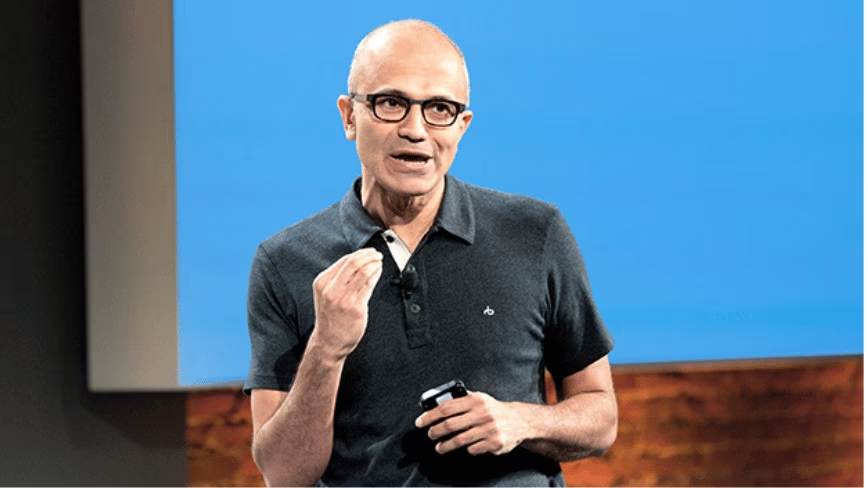
Satya Nadella Highlights the Hidden Costs of AI Adoption
Satya Nadella, Microsoft’s CEO, cautions businesses that adopting AI involves paying twice: not just financially but also by surrendering critical data, a concept he calls the Reverse Information Paradox. Microsoft’s involvement in developing AI technologies means it helped shape this complex landscape.