


Arbor: A Breakthrough AI Framework Unlocking 2.5x Efficiency Over Leading Code Agents
Arbor is a new AI optimization framework by Renmin University and Microsoft that outperforms leading coding agents like Claude Code and Codex by 2.5 times within the same compute budget. It uses a coordinator-executor system with a branching hypothesis tree to accumulate learning from experiments, avoiding repeated errors and reward hacking. Designed for complex engineering tasks, Arbor ensures verified improvements and integrates with existing git workflows, revolutionizing AI-driven optimization as a structured, cumulative process.

Security Alert: AI Tools Expose Critical Trust Boundary Vulnerabilities—Perform This 5-Step Audit Now
Recent exploits in AI tools like Microsoft Copilot and LiteLLM highlight dangerous weak points in enterprise AI security, risking data theft and unauthorized admin access. This article details a practical five-step audit to identify and fix these critical trust boundary failures—essential reading for CISOs and security teams to prevent costly breaches.

Adobe Integrates Agentic AI to Revolutionize Creative Cloud Workflows
Adobe introduces a powerful AI-driven creative assistant across Creative Cloud apps, transforming production workflows by automating complex tasks while preserving human creative control. Featuring new memory technologies and application-specific agents, this upgrade aims to streamline tedious processes, integrate with leading enterprise platforms, and support scalable, consistent creative outputs—addressing both efficiency and user preference in creative AI adoption.
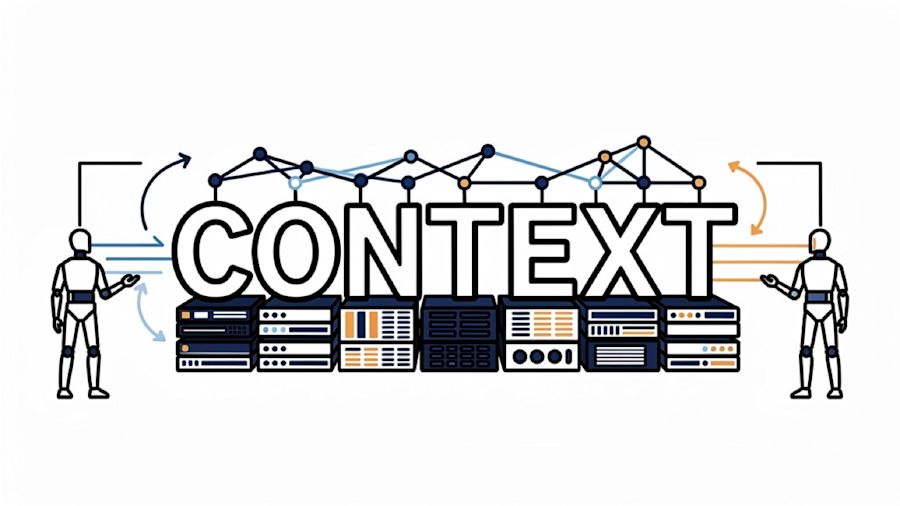
AWS Launches Self-Learning Context Layer to Empower AI Agents
AWS has launched AWS Context, a self-learning knowledge graph that automatically builds and evolves from existing enterprise data, enhancing AI agent capabilities without manual intervention. This release includes supporting services like Amazon S3 Annotations and Glue Data Catalog skill assets, offering a comprehensive context intelligence stack. AWS targets seamless integration with its ecosystem, providing enterprises with improved data relationships and access control, positioning itself in a competitive context layer market.


Deer Hunters Grow 5× Faster — and 70% of Startups Never Change Their Prey
New data from 1,043 SaaS and AI companies shows the customer you target before $10k MRR shapes your growth for years.


Survey Reveals 60% of US Consumers Distrust AI in Brand Messaging
WordPress VIP’s survey shows that 60% of US consumers find AI references in brand messaging unappealing, even as companies embrace AI-powered search for referrals, indicating a gap between consumer trust and business adoption.

Flutterwave Secures $3.2B Valuation with Ripple as Strategic Investor
Flutterwave, a leading African payments infrastructure firm, recently reached a $3.2 billion valuation. The company also announced Ripple as a key investor and partner, marking a significant step forward in its blockchain and fintech development.

SpaceX to Acquire Cursor in $60 Billion Stock Deal Following Major IPO
SpaceX is set to acquire Cursor for $60 billion in stock to strengthen its AI division, shortly after a significant IPO. The company recognizes a vast $26 trillion market opportunity in artificial intelligence.
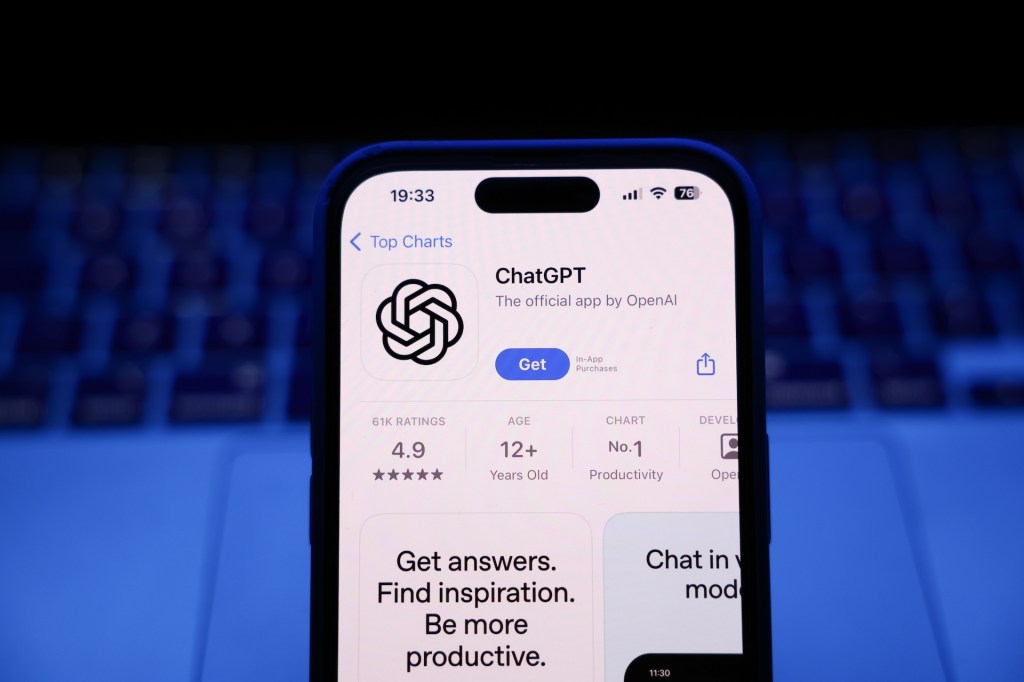
ChatGPT's Market Dominance Dips Below 50% for the First Time
ChatGPT continues to hold a strong presence as the most widely used AI assistant with over 1.1 billion monthly users. However, its market share has fallen below 50% for the first time, as competitors Gemini and Claude gain traction with 662 million and 245 million users respectively. This shift indicates growing diversity in AI assistant preferences worldwide.

Malaysia's AI-Driven Messaging Platform Respond.io Secures $62.5M Funding, Plans Strategic Acquisitions
Respond.io, a notable Malaysian startup, has raised $62.5 million to expand its AI-powered messaging platform. The company uses AI agents to handle numerous customer interactions, charging clients per conversation instead of per user seat, with plans to grow further through acquisitions.


Italian Regulator Opens DMA Investigation into Apple
Italy's competition authority, AGCM, previously found Apple abused its market dominance regarding third-party developers. Following this, the AGCM has now initiated an investigation under the Digital Markets Act (DMA) to examine Apple's competitive behavior.

Nuvei to Acquire Payoneer in $2.75 Billion Deal Enhancing Cross-Border Reach
Nuvei has announced its intention to acquire Payoneer for $2.75 billion, a move designed to strengthen its position and market access within the evolving and complex international payments sector.


From Setback to Smart Solution: How a Biotech Startup Created an AI Model from a Failed Trial
A biotech startup turned a failed clinical trial into an innovative AI model, showcasing resilience and ingenuity in healthcare technology. This transformation highlights the potential of AI in advancing medical research despite setbacks.


Embracing Uncertainty: How AI Enhances Probabilistic Thinking in Design
This article explores the concept of Probabilistic Design, highlighting how embracing uncertainty and interpreting AI predictions with nuance can empower UX and product teams to make smarter, more adaptive design decisions.


WPP Predicts AI-Powered Search Ads to Lead Advertising Growth
WPP and Madison & Wall project significant growth in AI-driven search ads, expecting it to be the fastest expanding advertising channel. The advertising market is anticipated to grow steadily despite economic uncertainties, highlighting resilience in ad spending.

Z.ai Launches GLM-5.2: A Cost-Effective, Open-Source LLM Outperforming GPT-5.5 on Coding Benchmarks
Z.ai's GLM-5.2 is a 753-billion parameter open-source language model that outperforms GPT-5.5 on long-horizon coding tasks while costing only one-sixth as much. Licensed under MIT, it offers enterprises unrestricted use and local deployment. Innovations like IndexShare reduce compute requirements substantially. Available on Hugging Face and APIs with flexible plans, GLM-5.2 delivers top benchmark scores, cost efficiency, and developer-friendly features, marking a significant advancement for affordable, high-performance AI coding technology.

Databricks Unveils Breakthroughs to Eliminate Data Pipeline Delays for AI Agents
Databricks announced Lakehouse//RT and LTAP, two groundbreaking technologies that unify operational and analytical data storage to remove latency and pipeline complexity, enabling AI agents to access live data in real time. This approach eliminates the traditional data duplication and delays caused by separate systems, supporting faster and more efficient AI applications. The innovations mark a shift from fragmented data architectures to streamlined, unified infrastructures that meet the demands of modern AI workloads.

Stanford's DeLM Framework Slashes Multi-Agent Task Costs by 50% Without Central Control
Stanford's DeLM framework reimagines multi-agent AI coordination by removing the need for a central controller. Through a shared knowledge base and decentralized task management, agents collaborate more efficiently, cutting task costs by 50% and boosting accuracy by 10.5%. This innovation improves performance in complex reasoning and software engineering tasks, proving faster, cheaper, and more reliable than traditional centralized systems.


Scaling AI Expertise: Insights from Bank of America's Bernard Hampton
Bernard Hampton of Bank of America reveals how the institution upskills 200,000+ employees for an AI future, balancing technical prowess with critical human skills like empathy and judgment. Through a three-level AI adoption strategy and AI-driven simulations, the Academy enhances workforce agility and client service. The approach emphasizes internal talent growth, measured AI use, and ongoing learning to adapt in a fast-changing environment.


Coach Launches New Brand Platform Featuring Celebrities and Gen Z Collaboration
Coach, with input from Gen Z, has unveiled a new brand platform that shifts the focus from fixed luxury narratives to collaborative storytelling. This innovative strategy leverages celebrity involvement and Gen Z perspectives to craft a more authentic and engaging brand experience.